Residential License # 890459
Commercial License # 3667
Designing the Great Outdoors. - New Orleans's #1 Outdoor Design Company!



Talk to an Expert
Residential License # 890459
Commercial License # 3667
Talk to an Expert
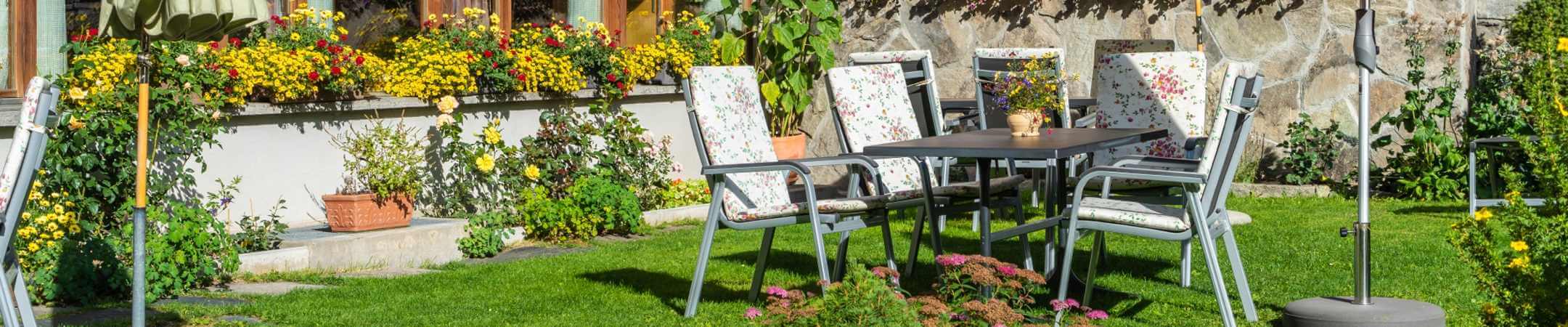
Mosquito-resistant outdoor design in New Orleans comes down to three things: remove the standing water mosquitoes breed in, move air across the areas where people sit, and screen the spaces you want to use at dusk. Container water in saucers, gutters, tarps, and plant leaves matters more than the yard at large, because that is where they actually reproduce.
Building a beautiful outdoor space here is straightforward. Building one people will actually sit in on a still August evening is the harder problem.
Mosquito pressure is a design variable in this climate, not an afterthought to be solved after the fact. At TurnKey Outdoor Designs, we plan outdoor rooms around it from the start, because retrofitting airflow or screening into a finished structure is the expensive way to solve it.
Here is what actually drives mosquito pressure in a yard, and which design decisions change it. Contact us today to plan an outdoor space around how you want to use it in the evening.
Two neighboring yards can have very different mosquito pressure, and the difference is rarely luck. It is usually breeding habitat, air movement, and shade, in that order.
Breeding habitat is the biggest lever because the container-breeding species stay close to home. Those mosquitoes range only a few hundred feet from where they hatch, so the water producing the ones bothering you on the patio is usually on your property or immediately next to it. Other species travel considerably further, which is why on-property work lowers pressure rather than settling it outright.
The rest is about conditions. Air that is still, humid, and shaded is where mosquitoes rest through the heat of the day, so a yard that is dense, enclosed, and windless holds them better than one that is open and moving.
The yard-scale puddle everyone worries about is rarely the problem. Small containers are, because they are undisturbed, sheltered, and easy to overlook.
Plant saucers sit on every list of containers worth emptying, and in a well-kept garden they are the easiest to overlook. They hold water for days, sit in shade, and get refilled every time the plant is watered.
Anything that holds a puddle qualifies. Buckets, wheelbarrows, children’s toys, pet bowls, and forgotten planters all do the job.
The fix is routine emptying. Tipping them out on a regular schedule breaks the cycle at the point where it starts.
A blocked gutter is a long, sheltered, shaded water container running the length of the house. It is also the one nobody looks at.
Downspout extensions and splash blocks collect water too, especially where they sit level rather than draining. So do the low points on flat or low-slope roof areas over porches and additions.
Clearing them is maintenance rather than design, but designing for access makes the maintenance actually happen.
Covered furniture is a reliable water trap. A cover that sags collects a pool on top, and the folds hold water even when the surface looks dry.
Grill covers, boat covers, and stacked chairs all behave the same way. So do the recesses in furniture frames and the gaps under cushions.
This is one more argument for storage over covering, and it is worth building somewhere dry into the plan.
Bromeliads and similar plants hold water in the cup formed by their leaves, which is a natural container. That is worth knowing before planting a bed full of them next to a seating area.
Water features are only a problem when the water sits still. Moving water in a fountain or a circulating feature does not offer the calm surface mosquitoes need to lay eggs on.
Tree holes, low spots that stay wet, and anything with a rim will collect. Walking the yard the day after rain and looking specifically for held water finds most of it.
Once breeding sites are handled, the next lever is making the space itself uncomfortable for them and comfortable for you.
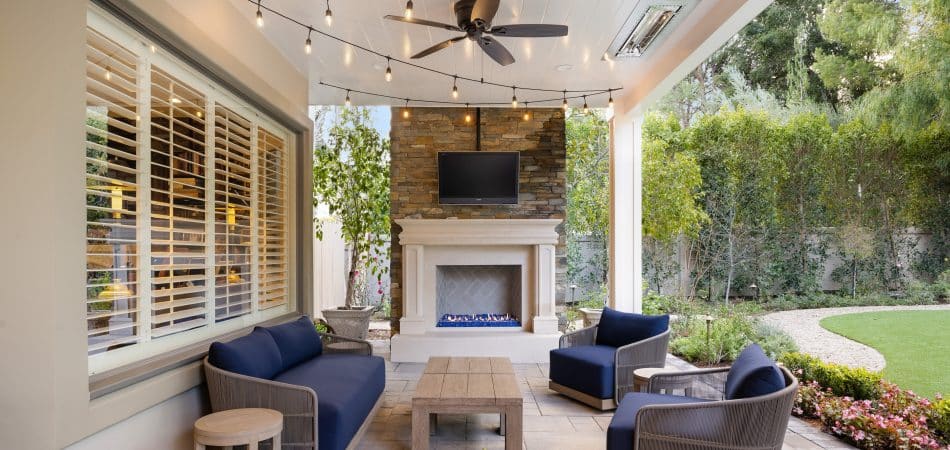
Mosquitoes are weak fliers, and a seating area with steady air movement across it is harder for them to work. This is why an outdoor ceiling fan is one of the first things worth specifying in a space meant for evening use.
Placement matters more than power. Air needs to move across the seating zone at seated height, not up near a roof where nobody is.
It also helps with heat, which makes it an easy decision to justify. One intervention, two problems.
Screening is the most reliable of these measures, because it is a physical barrier rather than a deterrent. For a space you want to use at dusk without thinking about it, this is the answer.
The details decide whether it works. Mesh size, how the frame seals at the base and corners, and how doors close all determine whether the enclosure is actually closed.
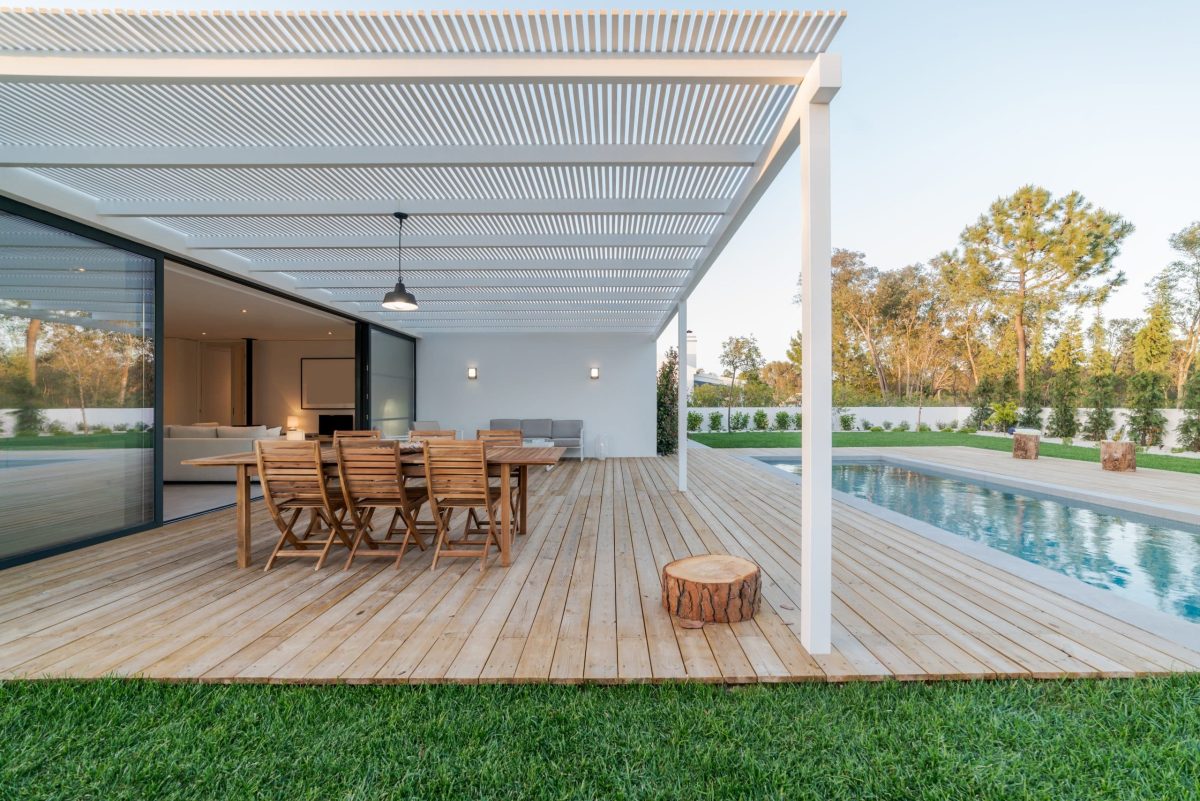
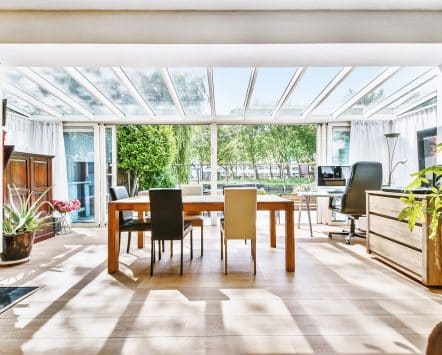
Our pergola and gazebo builds are often specified with screening in mind from the start, and our sunroom and enclosed structure builds take it further where a fully enclosed room is what the household actually wants.
Dense planting against a seating area gives mosquitoes exactly the still, shaded, humid resting conditions they prefer. Tall grass and overgrown beds do the same.
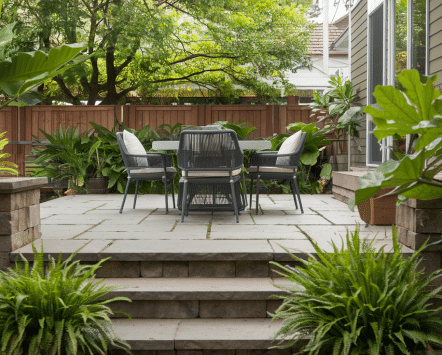
That does not mean stripping the yard. It means keeping the immediate seating zone more open and moving the dense planting further out.
Ground cover choice matters too. Dense mat planting right up to a patio edge holds moisture and stillness where you least want it.
Each measure below changes something different, which is why effective spaces combine several rather than relying on one.
| Design Choice | What It Changes | Where It Fits Best |
|---|---|---|
| Outdoor ceiling fans over seating | Moves air where people actually sit | Any covered patio, porch, or pergola with a structure to mount to |
| Screened enclosure | Physical barrier rather than a deterrent | The space you want to use at dusk without thinking about it |
| Grading and drainage that clears water | Removes the largest held-water breeding sites | Yards where water sits long enough for a cycle to complete |
| Moving water rather than still water | Removes the calm surface they need | Any water feature in or near a seating area |
| Open planting near seating, density further out | Removes the still, shaded resting zone | Patios and decks bordered by heavy planting |
Local mosquito control is a public service here as well as a private one. Where pressure stays high after the on-property work is done, the New Orleans Mosquito, Termite and Rodent Control Board is the right place to take it.
An outdoor space designed around this gets used far more than one that was not, and the measures are structural rather than ongoing. Empty the containers, move the air, screen what you want to use at dusk, and keep the seating zone open.
At TurnKey Outdoor Designs, we plan fans, screening, and drainage into the structure at design stage rather than bolting them on later. Call us today to plan an outdoor space you will actually sit in after sunset.
Very little. A plant saucer, a folded tarp, or the water held in a blocked gutter is enough, which is why small overlooked containers matter far more than the size of the yard. Walking the property the day after rain and looking specifically for held water finds most breeding sites.
Fans help. Mosquitoes are weak fliers, so moving air across a seating area makes it harder for them to fly and land, which is why outdoor ceiling fans are a standard recommendation for an evening space. Placement is what matters, since the air has to move across seated height rather than up near the roof.
A screened porch is the closest thing to a reliable barrier, because screening is physical rather than a deterrent. Whether it works in practice comes down to details: mesh size, how the frame seals at the base and corners, and whether doors close properly every time.
Plant saucers first, then buckets, wheelbarrows, toys, pet bowls, and anything else holding a puddle. Clear gutters and downspouts, check for water pooling on furniture covers and tarps, and look at plants like bromeliads that hold water in their leaves. Emptying them on a routine schedule is what breaks the breeding cycle.
Still water does. Moving water in a fountain or a circulating feature does not give mosquitoes the calm surface they need to lay eggs on, which is why a well-designed water feature is not the problem people assume. A feature that stops circulating becomes one.
Plants are more useful for what they avoid than for what they repel. Species that hold water in their leaves create breeding sites, and dense planting against a seating area creates the still, shaded conditions mosquitoes rest in, so layout tends to matter more than species choice.
Activity varies by species, with some most noticeable around dawn and dusk and others active through the day. That variation is exactly why design measures beat timing your evening around them, since there is rarely a window that is reliably clear.
A roof by itself does little, since a cover without airflow can create the still shade mosquitoes prefer. A covered structure becomes effective when it carries a fan, and effective again when it is screened, which is why the structure and the airflow are worth planning together.
 Turnkey Outdoor Designs