
01
Free Site Assessment and Design
We shoot the levels, find where water currently stands and work out what the levee side of the lot is doing before anything is drawn.
Harahan
Decks, patios, outdoor kitchens, pergolas and sunrooms, drawn and built by one team. Ten feet above sea level, which is modest but meaningfully higher than the ground immediately either side of it.
What You Get
A free estimate after a site visit, and a design drawn for what is actually under your lot. Ten feet above sea level, which is modest but meaningfully higher than the ground immediately either side of it. Everything else on the project is planned after that question is settled.
We walk the lot, take the levels off the levee side and give you a figure built from what is actually there. No charge, and nothing owed afterwards.
The extra elevation gives a Harahan yard something to work with, though the rain is no lighter than anywhere else in the parish. We settle that before a surface or a material is chosen.
Residential License # 890459 and Commercial License # 3667, and the same licences cover every parish along the river we work in.
The person who reads the levels is the person who sets the footings. On ground this flat that single fact decides whether the finished surface drains.
River-bank damp reaches a structure from underneath first, so the framing and the fixings are specified before anyone talks about the surface.
We work Monday to Friday, 8:00 AM to 3:00 PM. The Earhart Expressway runs alongside, which is how most deliveries reach a Harahan job without crossing the parish.
Why People Call
Usually because the yard stopped draining and then stopped being used. The extra elevation gives a Harahan yard something to work with, though the rain is no lighter than anywhere else in the parish.
The extra elevation gives a Harahan yard something to work with, though the rain is no lighter than anywhere else in the parish. It is the single most common reason a yard here goes unused.
A small city of nine thousand people, where outdoor space tends to be about the household rather than about hosting the street. Shade is usually what unlocks the rest of the yard.
On low ground the framing goes before the boards do, and by the time a deck feels wrong underfoot the structure is usually the work.
Cooking indoors while everyone sits out on the levee side puts the host in the wrong room, and an outdoor kitchen is what fixes it.
Buyers along the river look closely at what a yard does in heavy rain, and a surface that visibly drains is worth more than one that does not.
Roots lift paving and beds drain onto surfaces they were never meant to reach, which on flat ground undoes the falls you paid for.
Cracked concrete and sunken pavers on this ground are almost always a base problem rather than a surface one.
A space you cross wet grass to reach does not get used, and on flat ground the grass stays wet for a while.
Furniture crowded into the one corner that stays dry is a layout problem, not a furniture problem. Harahan grew as a railroad town from 1894 and incorporated in 1920, so lots here are generally deeper and quieter than the surrounding parish.
What We Build
All five, across the whole of Harahan and the communities beside it. A small city of nine thousand people, where outdoor space tends to be about the household rather than about hosting the street. Most river-side projects end up combining two of them, and drawn together they share one base.
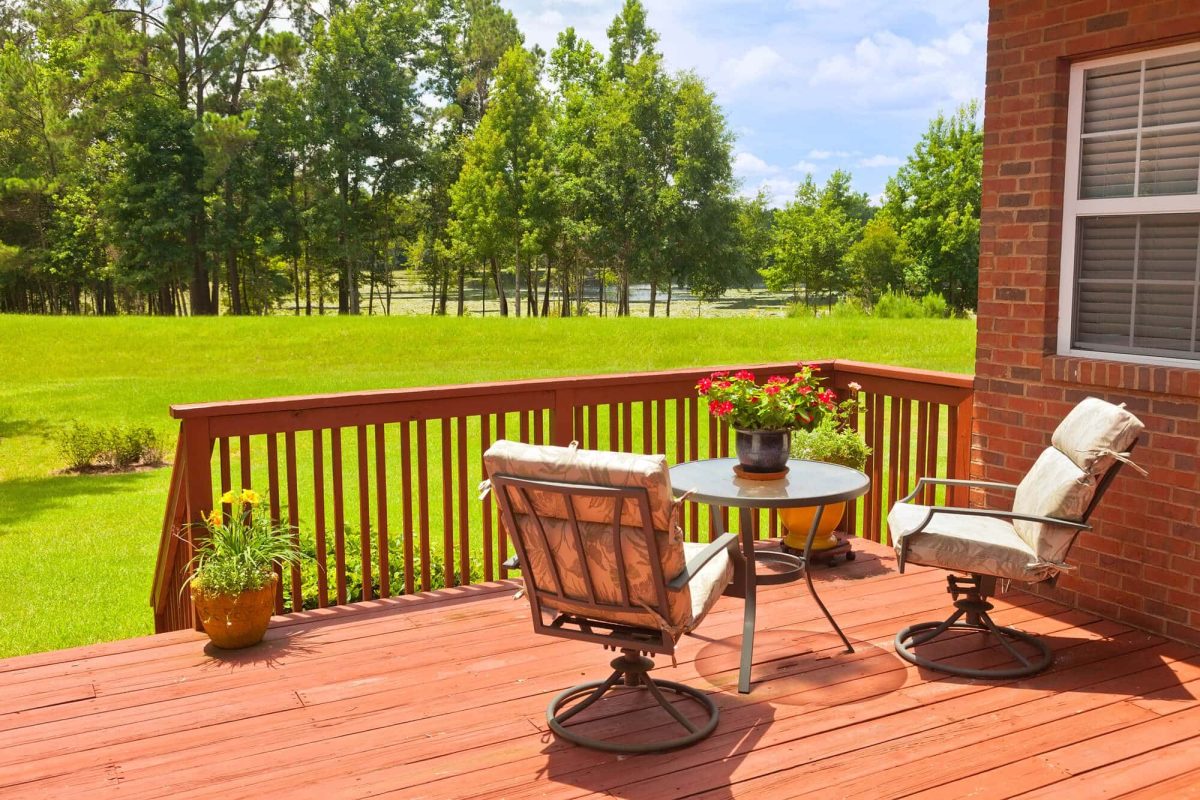
Outdoor Home Decks in Harahan. A level, usable surface where the ground will not cooperate, with the upkeep of wood and composite weighed against this climate.
Learn more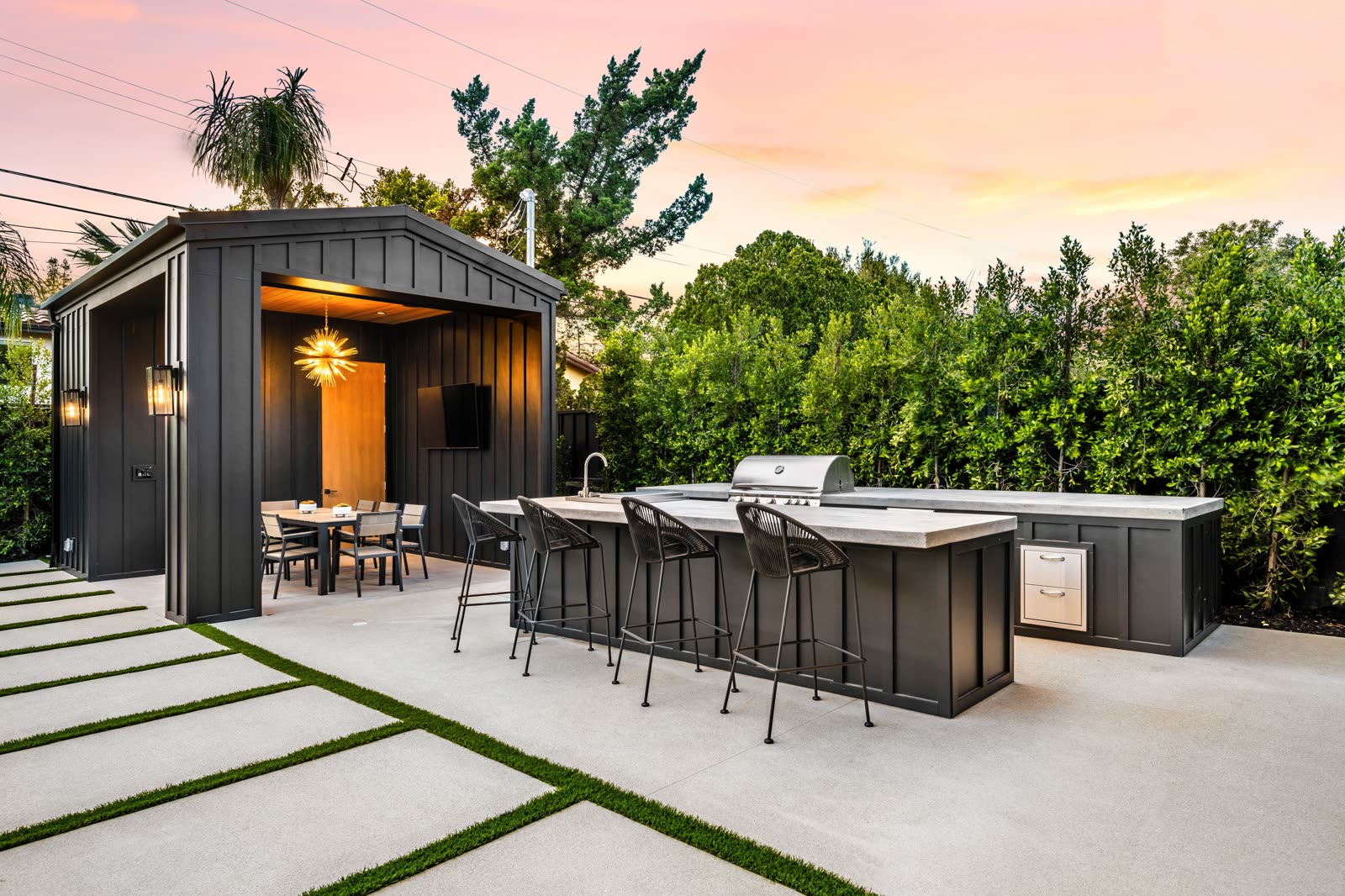
Outdoor Kitchens in Harahan. A grill, the counter and storage around it, and the gas, water and power that have to reach the island.
Learn more
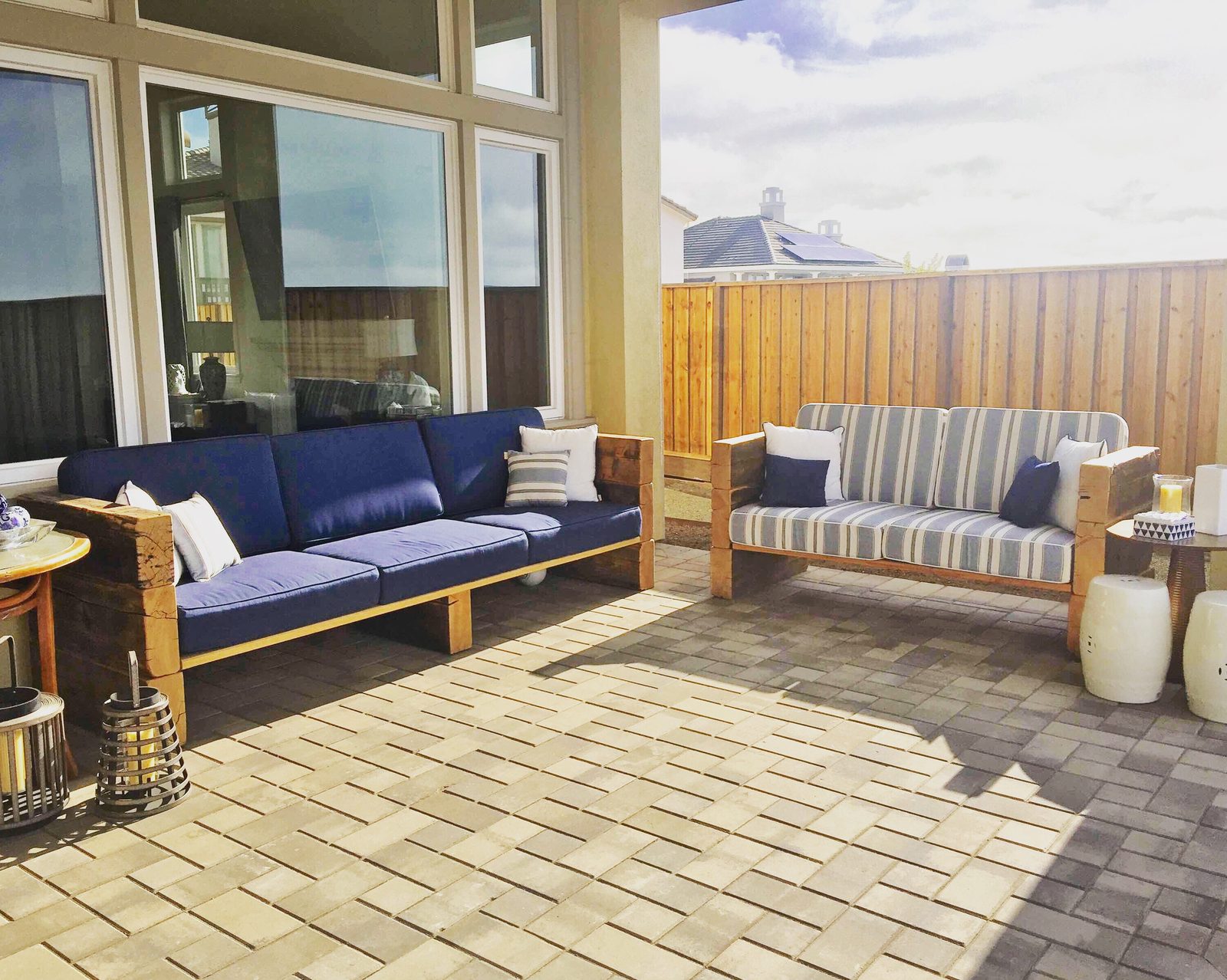
Patios in Harahan. Hard surfaces set to drain properly on flat ground, sized for the furniture and the number of people you want to seat.
Learn more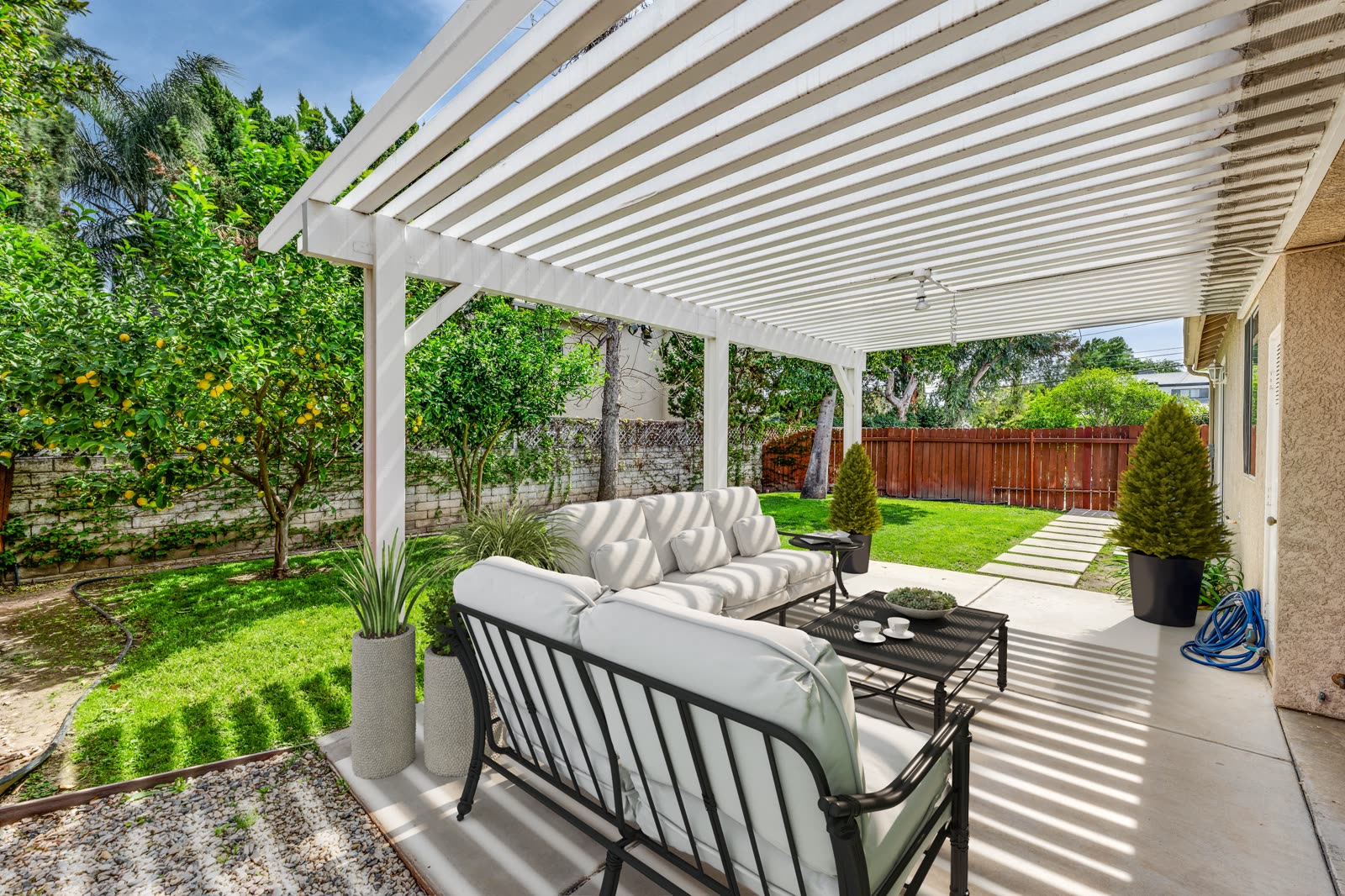
Pergolas and Gazebos in Harahan. Shade where the afternoon sun makes a space unusable, set on footings that hold in this ground.
Learn more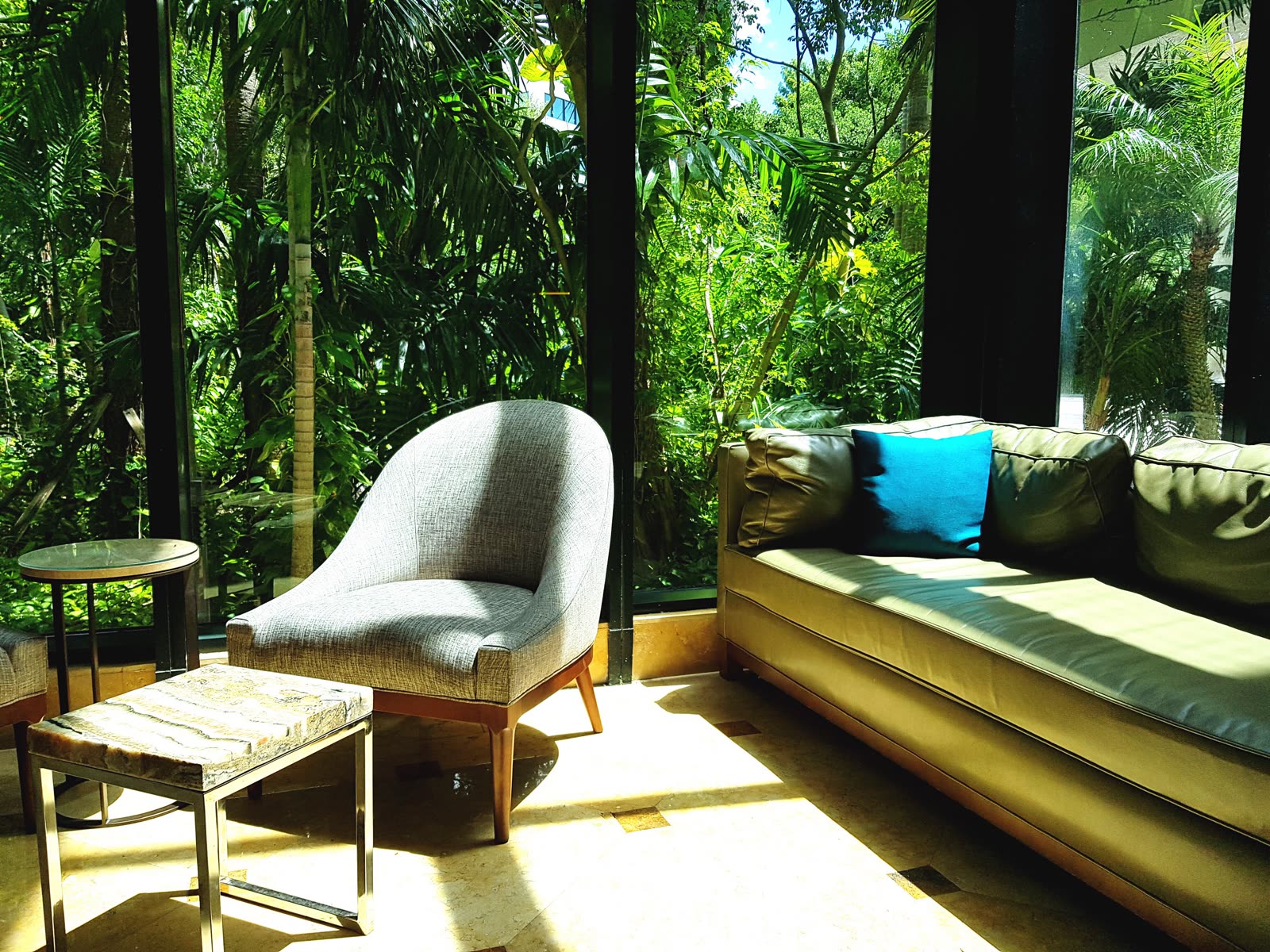
Sunroom in Harahan. An enclosed room that keeps the daylight and the view while shutting out the heat, the rain and the insects.
Learn more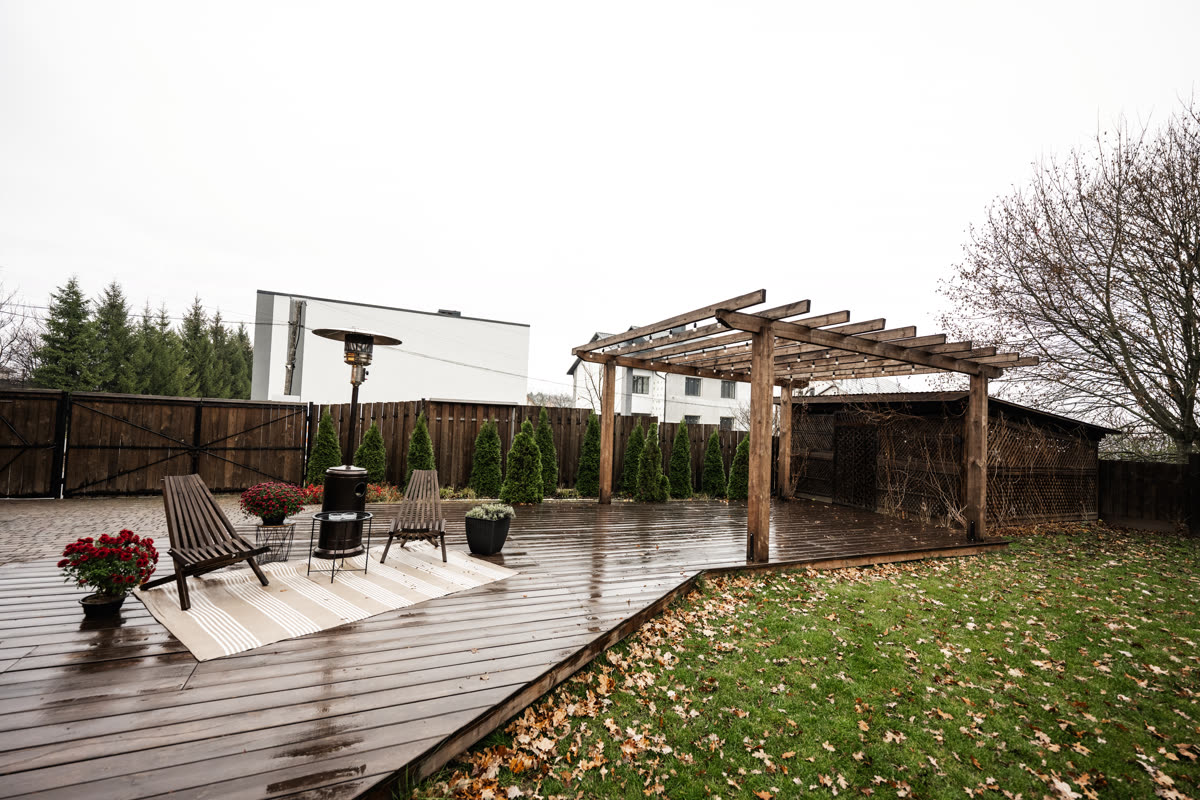
The full list of the fourteen cities we design and build in, from Greater New Orleans across the north shore.
Learn more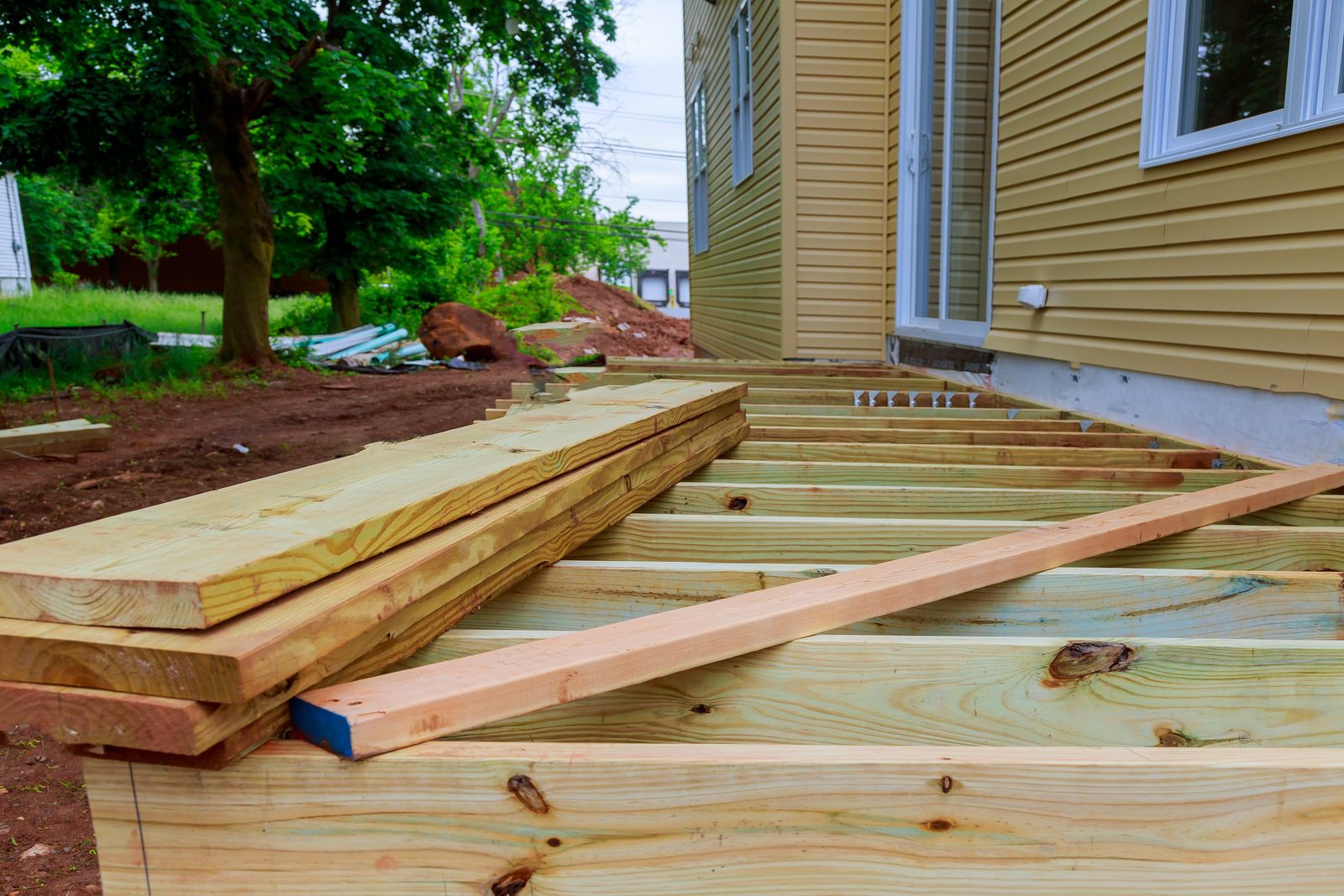
Signs to Watch
Standing water a day after rain, timber that gives underfoot, and a surface nobody uses in high summer. Ten feet above sea level, which is modest but meaningfully higher than the ground immediately either side of it. Any one of them is worth a site visit, because on this ground all three get worse in the same direction.
Standing water a day later means the fall was never built in. That is a drainage job before it is a surfacing job.
Give underfoot on low ground almost always means the frame, and the frame is cheaper to check than to replace.
An empty surface between June and September usually means shade, not a failed slab. A small city of nine thousand people, where outdoor space tends to be about the household rather than about hosting the street.
Local Ground
Flat river-bank ground at or near sea level, behind a levee. There is almost no natural fall to move water off a surface, so drainage is the first decision on every build and everything else is planned around it.
| Local condition | What it does to a build | What we do about it |
|---|---|---|
| Ground at or near sea level | Water has nowhere obvious to go once it lands. | Levels and falls taken from the lot itself, with drains and proper sloping designed in before a surface is chosen. |
| Life behind the levee | The whole drainage picture is man-made, and it works only where it was planned. | We look at where rain currently stands before recommending a deck or a patio, because the answer changes lot by lot. |
| Heavy rainfall | Rain arrives fast and all at once rather than spread across a day. | Drainage designed first. Correcting a fall after a surface is laid means lifting the surface. |
| Sustained humidity | Damp works on framing, fixings and finishes every month of the year. | Materials weighed on what they do after a few summers here, not on how they perform somewhere drier. |
| River-bank soil | Soft ground moves, and it does not move evenly across a single lot. | Footings and bases set from a survey of the actual ground rather than from an assumption. |
| A long hot season | Unshaded decking and paving go unused through the middle of the day. | Shade planned with the build. A pergola over part of a surface also protects what is underneath it. |
Drainage is the first decision here, not the last. Ten feet above sea level, which is modest but meaningfully higher than the ground immediately either side of it. Every Harahan project gets a free estimate after a site assessment, because the ground is what sets the figure.
Local Contractor
Someone who already knows what water does on ground this flat. Harahan grew as a railroad town from 1894 and incorporated in 1920, so lots here are generally deeper and quieter than the surrounding parish.
The Earhart Expressway runs alongside, which is how most deliveries reach a Harahan job without crossing the parish.
Ten feet above sea level, which is modest but meaningfully higher than the ground immediately either side of it. That is normal to us rather than a surprise on the day.
The crew that surveyed your levee-side levels is the crew that turns up with the concrete.
Residential License # 890459 and Commercial License # 3667, plus finished work along this stretch of the river you are welcome to go and look at.
How It Runs
Three stages, always in the same order, and on ground this low the first one carries the project: a free site assessment, then materials and the estimate, then the build.
We shoot the levels, find where water currently stands and work out what the levee side of the lot is doing before anything is drawn.
Materials chosen against the humidity and rainfall here, with a figure built from the site itself rather than from a phone call. Harahan grew as a railroad town from 1894 and incorporated in 1920, so lots here are generally deeper and quieter than the surrounding parish.
Drainage and base first, always, then the structure, with the falls checked again before anything is surfaced.
Before You Start
Where the water goes, how much of the year the space has to work, and what the surface will ask of you. On this ground the first one decides the other two.
The extra elevation gives a Harahan yard something to work with, though the rain is no lighter than anywhere else in the parish. It sets the base, which is the part that costs most to redo.
A shaded space and an unshaded one are different builds on this ground, and July is the month that decides it.
Every material trades cost now against attention later, and damp ground shortens the gap between the two.
Recent Work
Finished decks, patios and outdoor kitchens from along the river and across Greater New Orleans. The Earhart Expressway runs alongside, which is how most deliveries reach a Harahan job without crossing the parish.
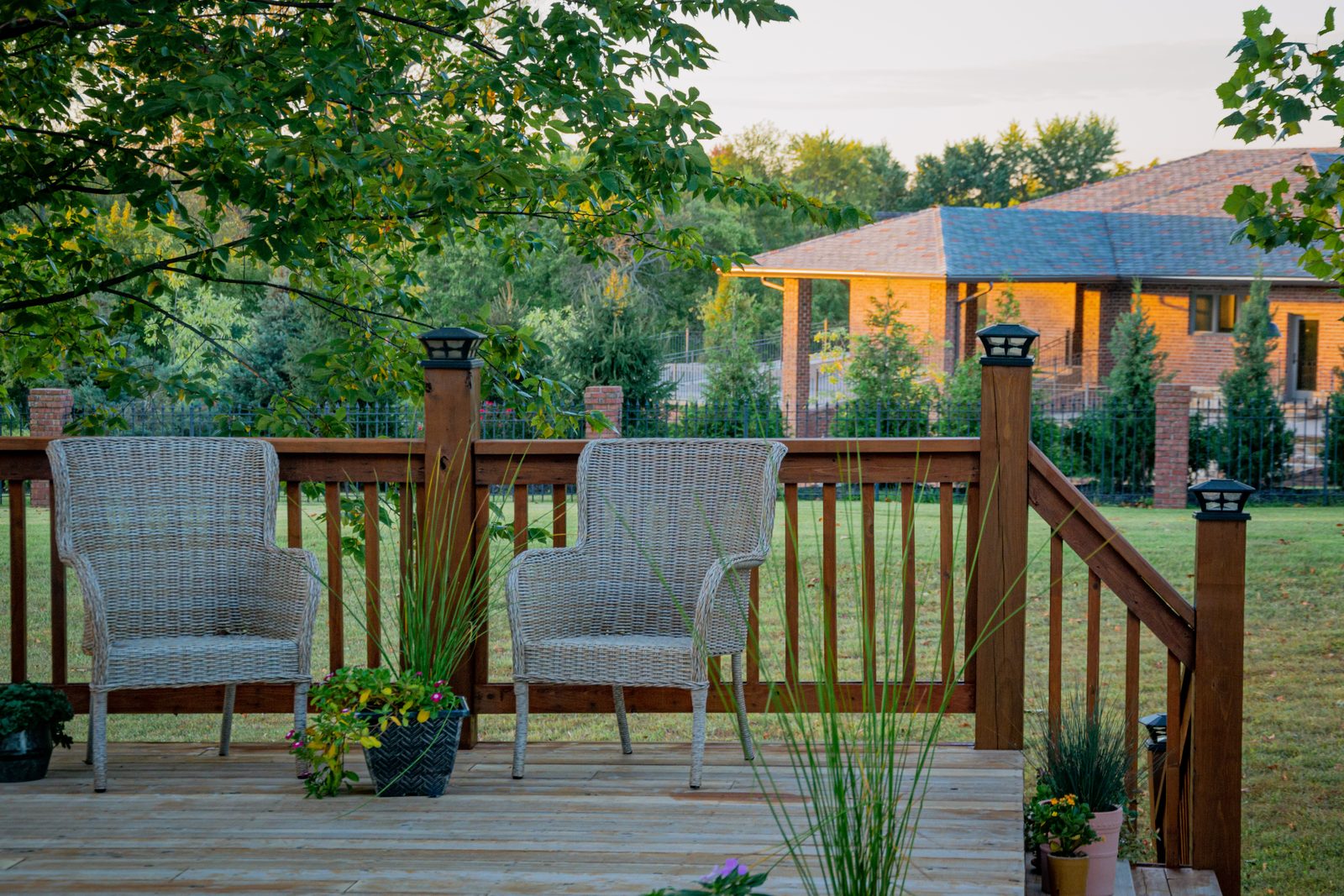
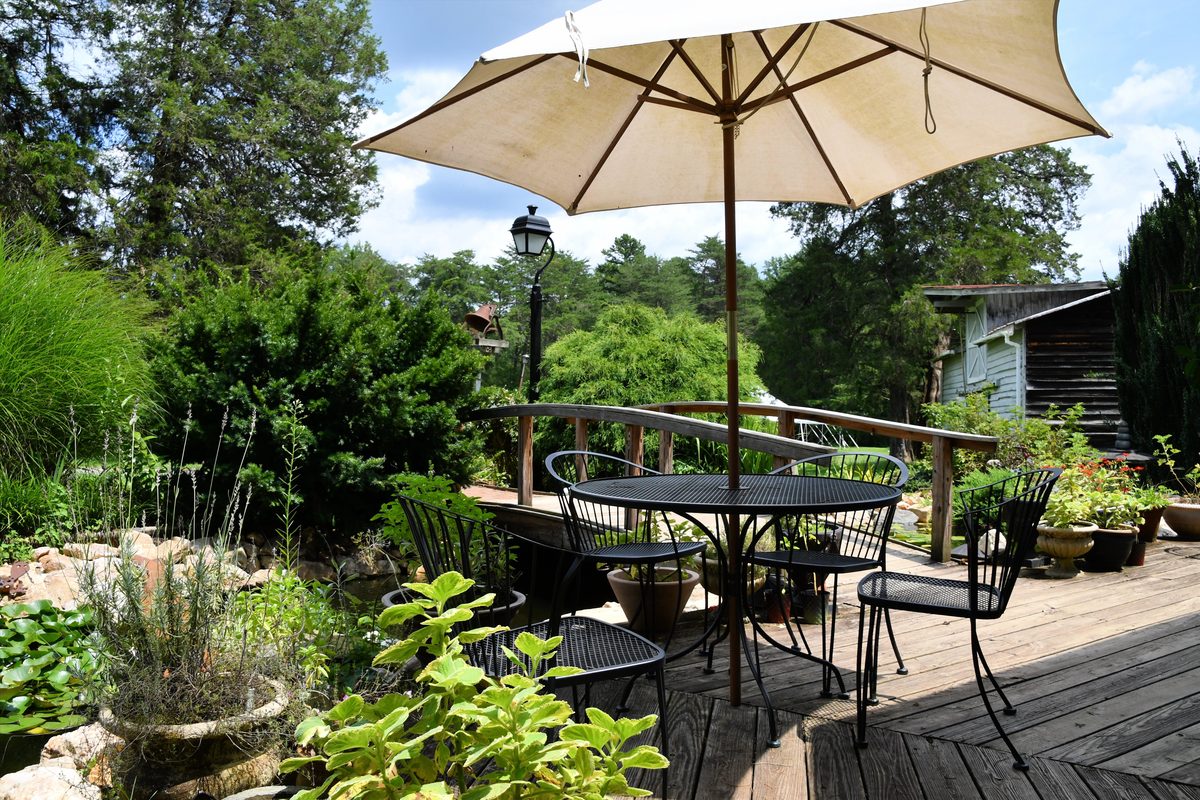 Outdoor table and chairs set out on a wood deck
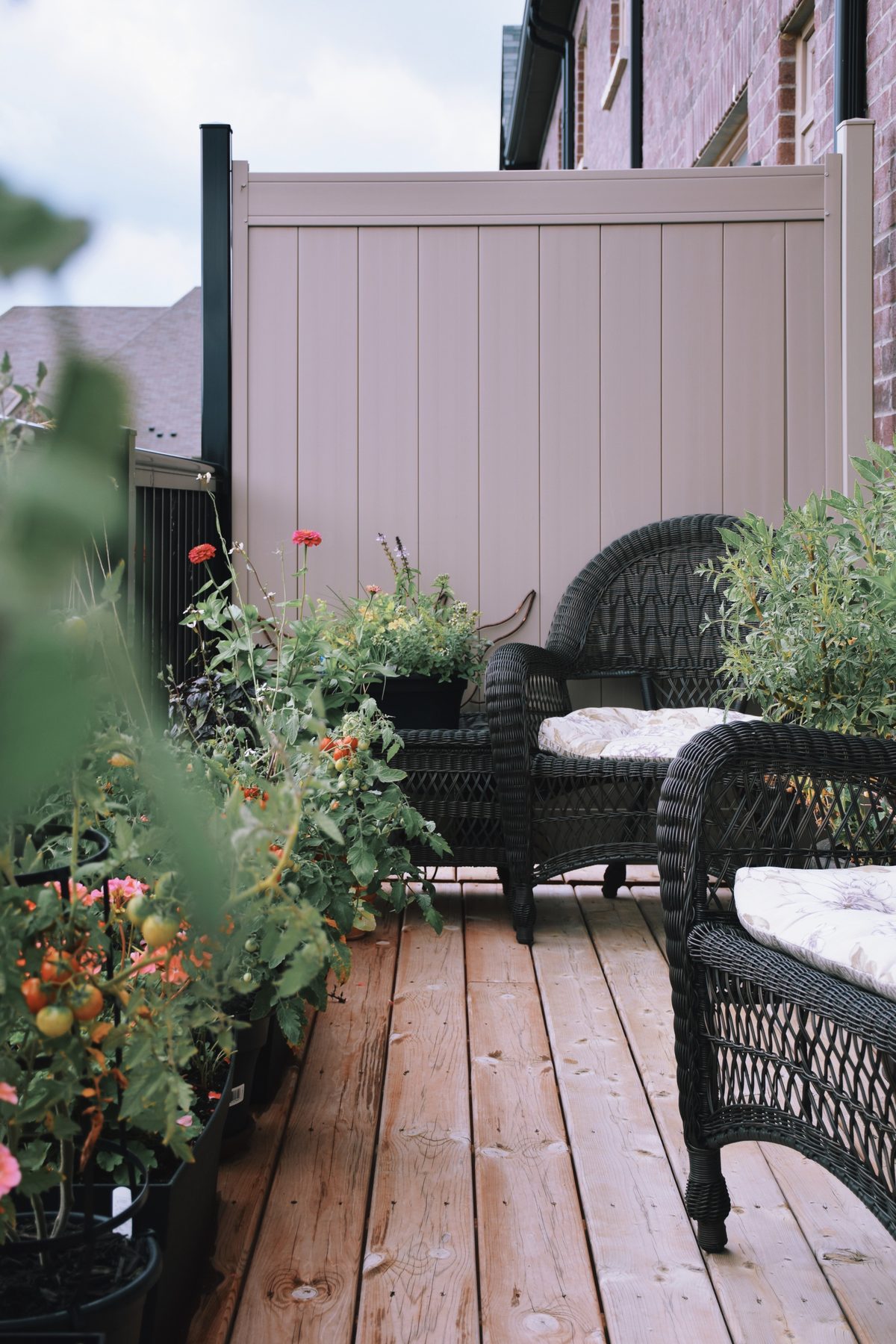 Cozy deck corner with chairs and dense potted planting
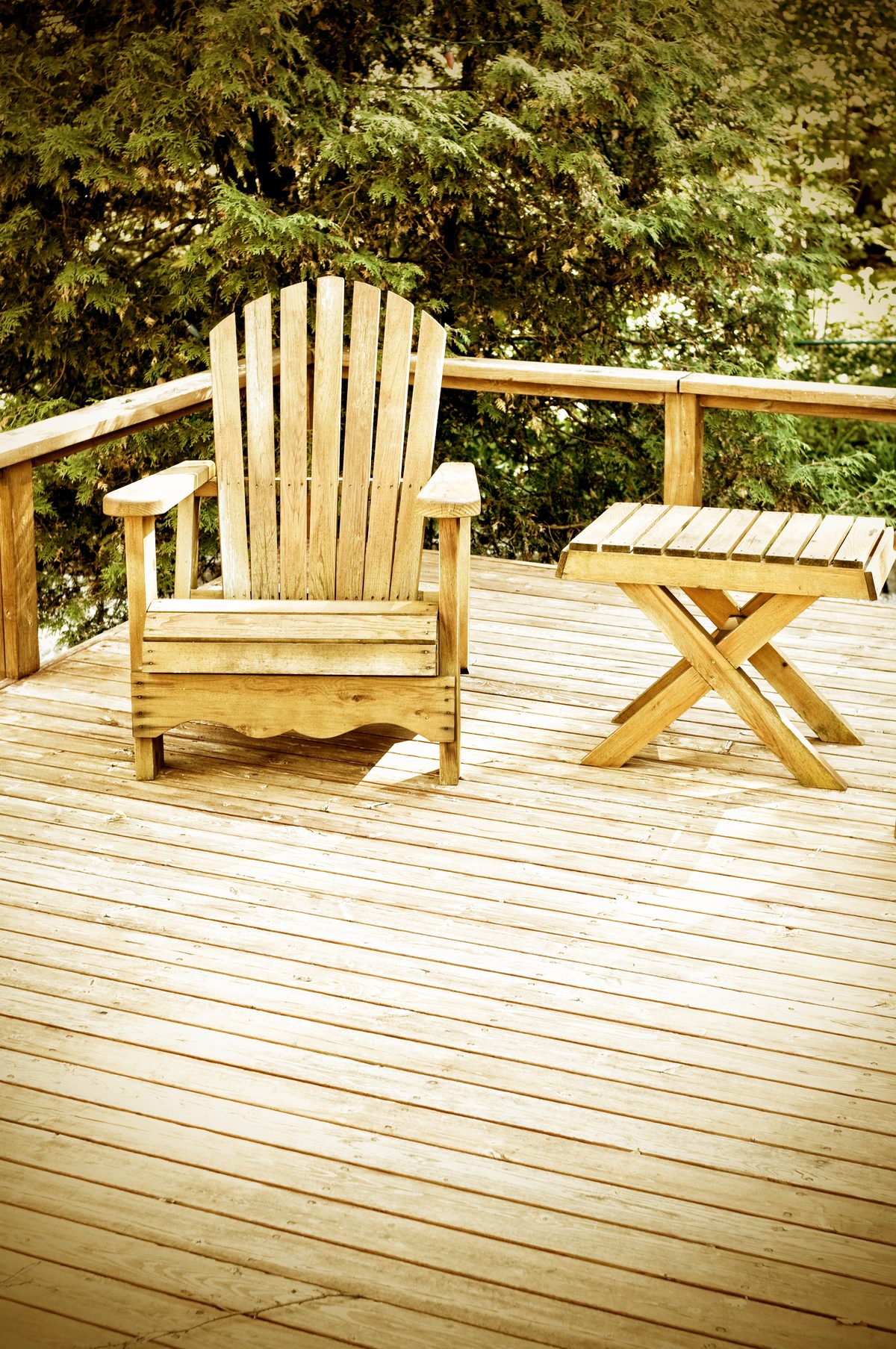 Adirondack chair and a side table on a timber deck
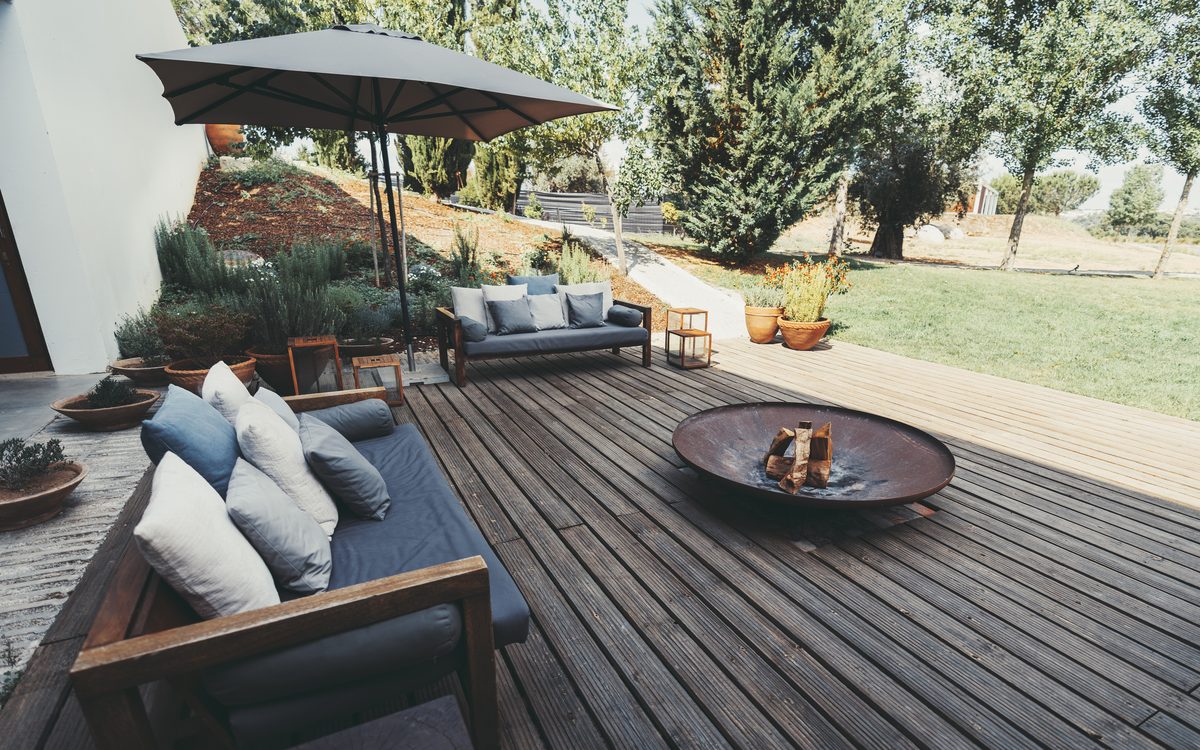 Lounge seating around a fire pit on a wooden deck
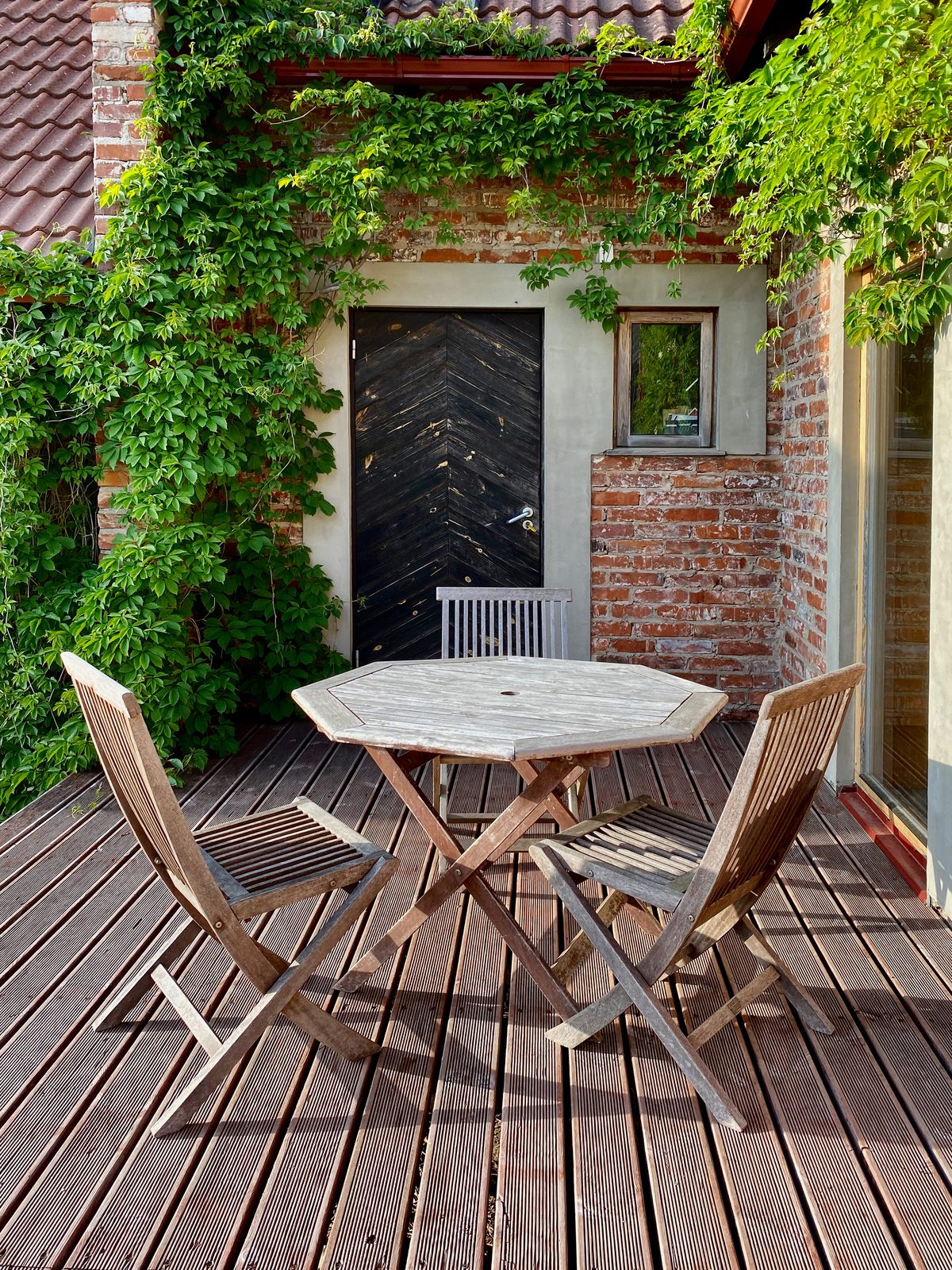 Wooden table and chairs on a paved patio beside planting
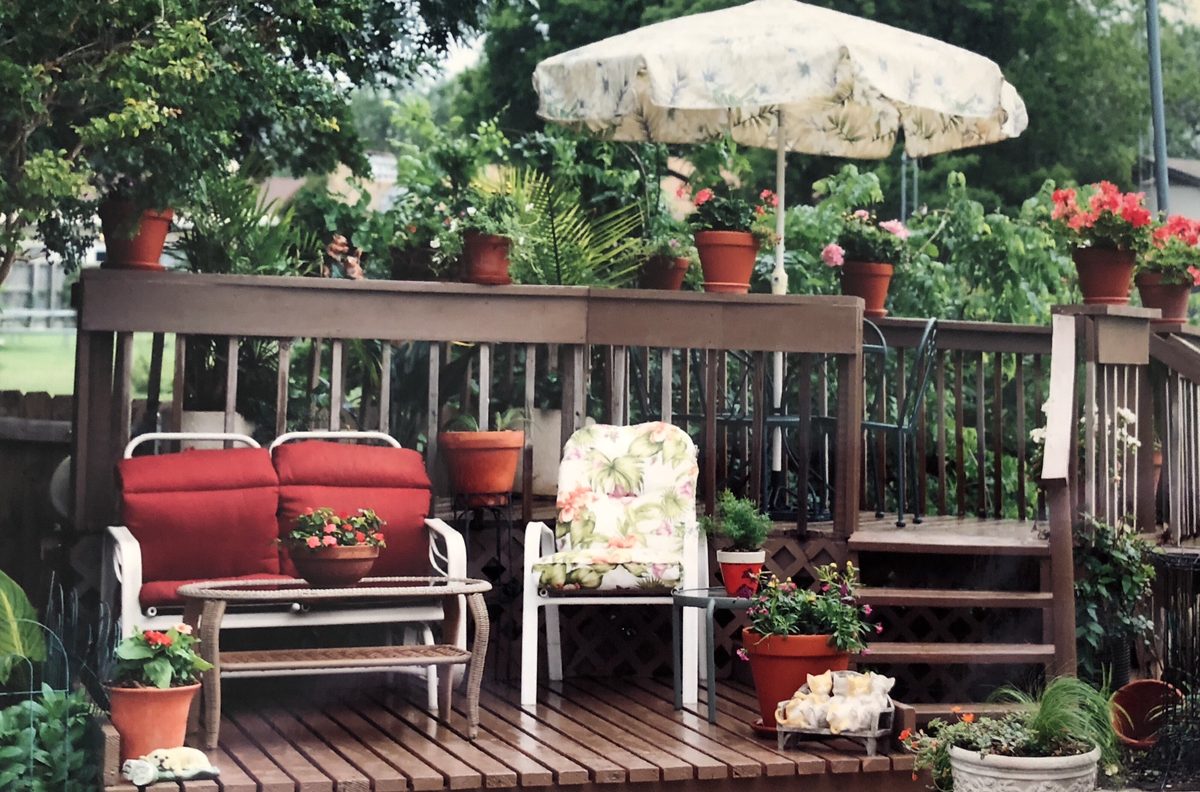 Timber deck with blooming flowers and potted plants along the railing
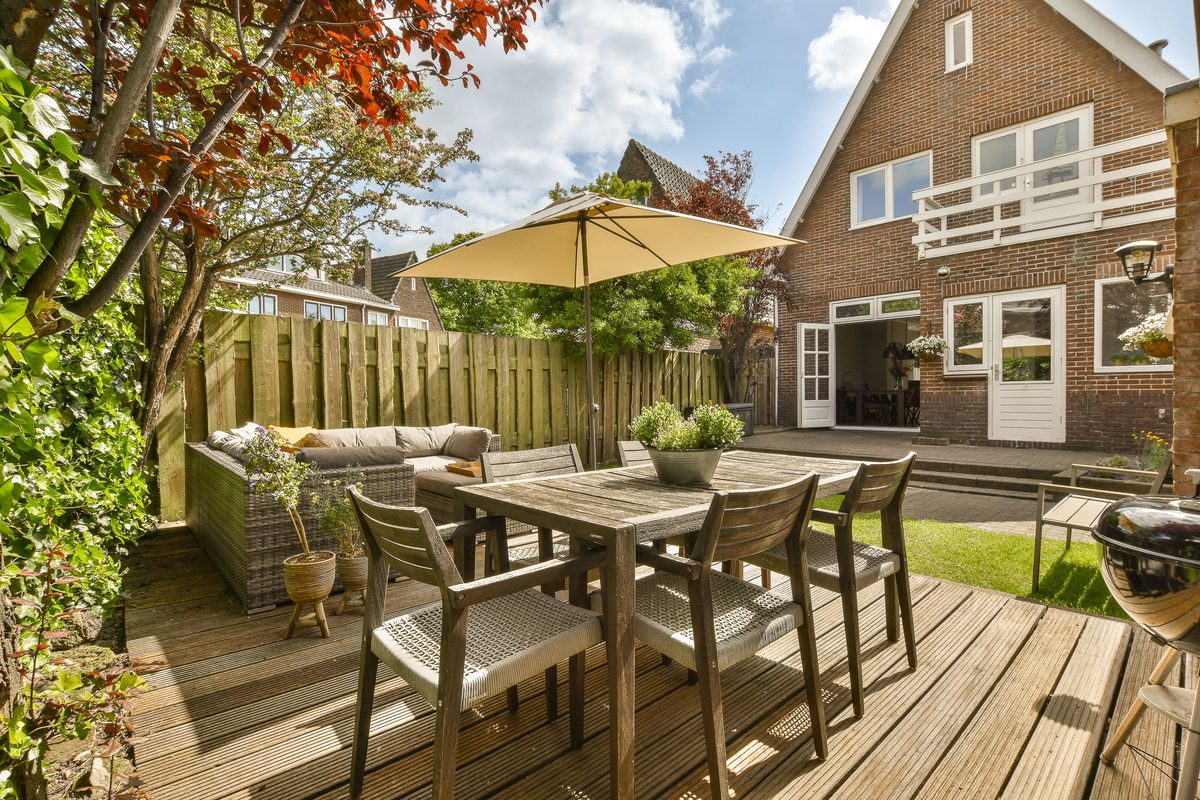 Backyard patio with a dining table under a wide umbrella
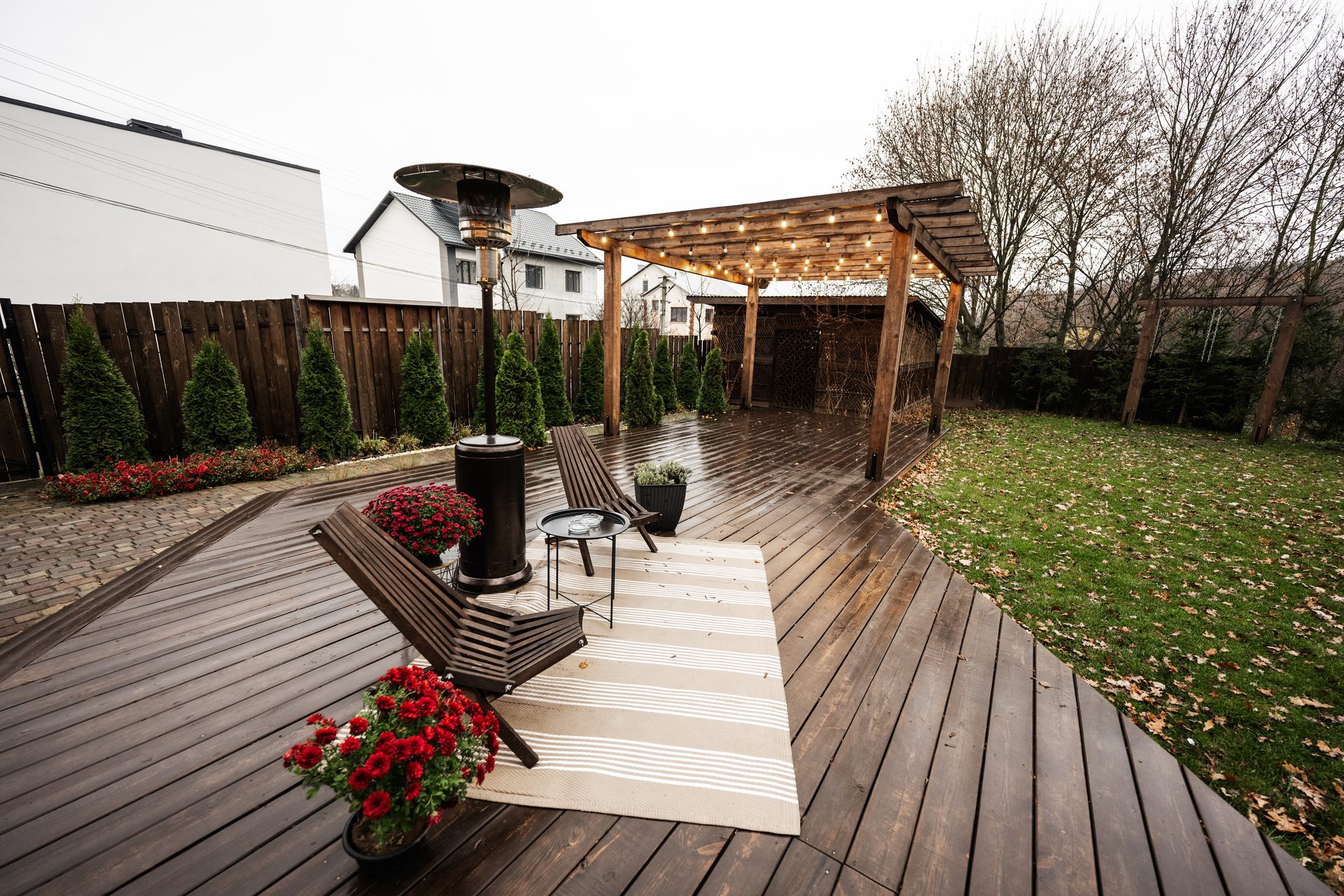 Covered deck with a patio heater, string lights and lounge chairs beside a lawn
About the Area
Harahan is an incorporated city in Jefferson Parish, not an unincorporated community, with a population of 9,116 at the 2020 census. The city takes its name from James Theodore Harahan, president of the Illinois Central Railroad, whose company put the first non-agricultural development here in 1894.
Harahan is an incorporated city in Jefferson Parish, not an unincorporated community, with a population of 9,116 at the 2020 census.
The city takes its name from James Theodore Harahan, president of the Illinois Central Railroad, whose company put the first non-agricultural development here in 1894.
Higher than much of the surrounding area, which changes what a yard here can do with water compared with a lot two miles away.
Around Town
The places people give directions from, and the ones they mention when they describe where they live. We name them because that is usually how a first consultation starts.
It hosted the New Orleans Women’s Open in 1954, and it is still the landmark most people name first.
Formerly Moisant Park, named for the aviation pioneer John Moisant, and the town’s main green space.
The historic Wedell-Williams airfield operated here through the 1940s, long before the airport moved west.
The east-bank levee path, and the reason the town sits where it does.
Nearby
The ones around it. Every community listed here sits inside the fourteen cities we serve, so a build on the boundary is no different from one in the middle.
Immediately west of Harahan, sharing the same stretch of the east bank and the same conditions.
East along the river, both inside our fourteen cities.
North and west. A build on the Harahan boundary is no different from one in the middle.
Fun Facts
None of it changes a deck, but it is the kind of thing that comes up on a first visit, and knowing where you are building is part of building well.
Development began in 1894 with the railroad; the village became a municipality twenty-six years later.
James Theodore Harahan of the Illinois Central.
Modest, but meaningfully higher than the ground either side of it.
9,116 at the 2020 census, which is small enough that the same crew will know your street.
Getting Around
It matters to us mainly because it tells us how a crew and a delivery will reach your street, and how long a site visit takes from our side.
Jefferson Parish Transit runs this route along Jefferson Highway between Kenner and Claiborne at Carrollton.
Along West Esplanade Avenue and Clearview Parkway through the Elmwood side.
The main road link into New Orleans, and how most deliveries reach a Harahan job.
The parish operator runs the fixed routes here, with paratransit alongside them.
Where We Build
All fourteen. We build across Greater New Orleans and the north shore, out to Hammond and Baton Rouge, and every service we offer is available in all of it.
Before You Call
The things Harahan homeowners ask us most, before a first consultation.
Size, materials and what the ground needs first. On low river-bank lots the drainage work is usually what moves the figure, and we price it after a site visit rather than over the phone.
Because the fall was never built into the surface. The extra elevation gives a Harahan yard something to work with, though the rain is no lighter than anywhere else in the parish. Unless the levels move water off deliberately it will stand wherever the ground is lowest.
It depends on the levels. Ten feet above sea level, which is modest but meaningfully higher than the ground immediately either side of it. A deck solves ground that will not cooperate; a patio suits ground that can be prepared to drain.
The ones specified for constant damp. Composite asks less of you than wood year to year, and on this ground the fixings and the framing matter more than the surface.
Yes. Every neighbouring community named on this page sits inside the fourteen cities we serve, and every service we offer is available across the whole area.
Yes, and on low ground it is much cheaper together, because the base has to carry both and the services run under it.
It turns on how much groundwork the lot needs before anything is built, which on this ground is usually the long pole. We give you a schedule after the site assessment. The Earhart Expressway runs alongside, which is how most deliveries reach a Harahan job without crossing the parish.
Yes. We hold Residential License # 890459 and Commercial License # 3667, and the same team designs and builds every project rather than handing it between two companies.
Next Step
We will tell you what is realistic on low ground before you spend anything. A small city of nine thousand people, where outdoor space tends to be about the household rather than about hosting the street. The consultation and the estimate both cost nothing.
Monday to Friday, 8:00 AM to 3:00 PM