Residential License # 890459
Commercial License # 3667
Designing the Great Outdoors. - New Orleans's #1 Outdoor Design Company!



Talk to an Expert
Residential License # 890459
Commercial License # 3667
Talk to an Expert

Outdoor Living Guide
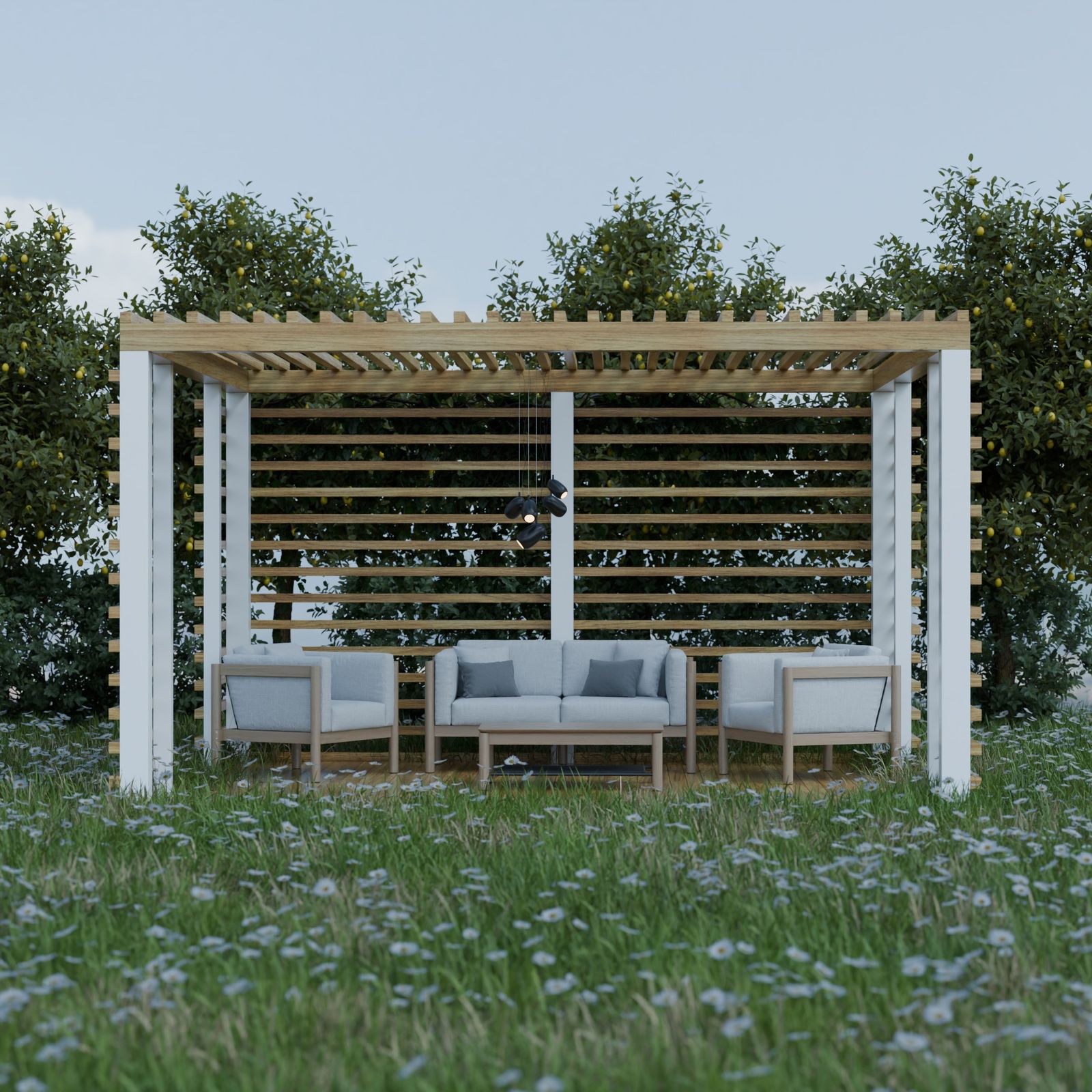
A cozy pergola nook comes down to four layered choices: furniture grouped for close conversation, textiles that do not trap humidity, warm layered lighting, and soft privacy. Each one is a design decision rathe
A cozy pergola nook in New Orleans comes down to four layered choices: furniture sized and grouped for close conversation, textiles that add texture without trapping humidity, lighting arranged in warm layers instead of one overhead fixture, and soft privacy at the edges. Most pergolas here stop at being a shade structure, which is why they read as unfinished patio rather than as a room.
A cozy pergola nook comes down to four layered choices: furniture grouped for close conversation, textiles that do not trap humidity, warm layered lighting, and soft privacy. Each one is a design decision rather than a purchase.
At TurnKey Outdoor Designs, we find most backyard pergolas here start as a shade structure and stop there. That is why they feel like an unfinished patio extension rather than a room.
Turning one into a nook takes the same thinking any room gets. Contact us today to plan what sits under yours.
A pergola provides structure and shade, but structure alone does not create comfort. Coziness comes from how the space underneath is scaled, filled, and lit.
The most inviting pergola nooks borrow rules from interior design: a defined footprint, furniture pulled close for conversation, and soft material that softens hard surfaces like concrete or wood decking. Many of the nooks we build start with a patio installation as the hard-surface foundation.
The sections below break the process into four layers: furniture, textiles, lighting, and privacy. Each layer solves a reason pergola spaces in New Orleans often feel unfinished, from furniture placed too far apart to lighting that floods the whole yard.
Furniture scale and placement do more to create intimacy than any accessory. Get these four factors right and even a modest footprint feels like a real room.
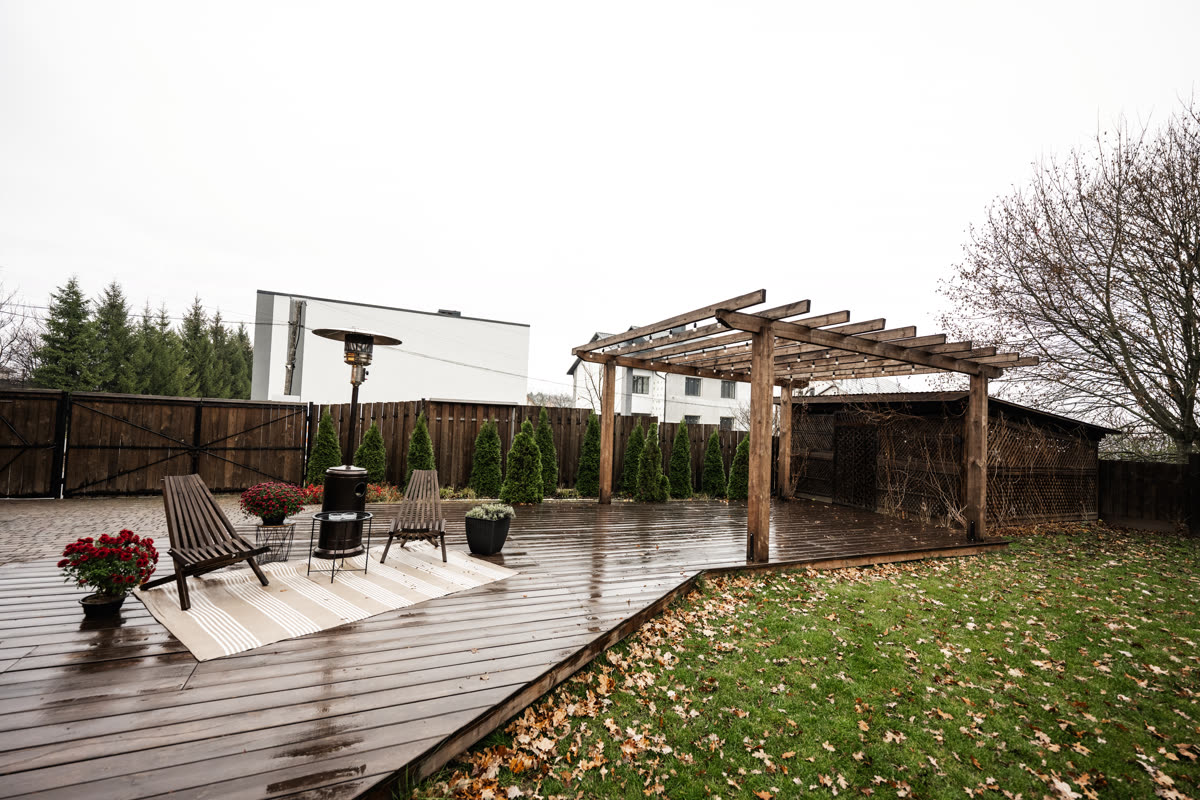
Oversized sectionals swallow a small pergola footprint and push seating to the outer edges. A loveseat and two chairs, or a pair of deep lounge chairs with a small side table, usually fits better and leaves room for a rug.
Measure the covered footprint first, then subtract at least 24 inches of clearance on each side before choosing furniture. Furniture that is slightly undersized, rather than crammed to the edges, reads as intentional once textiles and lighting are layered in.
Cozy seating faces inward rather than outward toward the yard, the opposite of how most patio sets get arranged out of the box. Angling chairs at roughly 90 to 120 degrees, rather than lining them straight across, keeps sightlines natural for conversation.
A round or oval coffee table works better than a rectangular one because it keeps every seat about the same distance from the center. Keep the circle tight enough that people can hand off a drink without leaning forward.
Smaller footprints benefit from furniture that pulls double duty instead of adding a piece for every function. A storage ottoman doubles as extra seating and a table, and a slim bench seats more people per linear foot than chairs.
Stackable side chairs let a two-person nook expand for company without permanently occupying floor space. This flexible seating matters more under a compact custom pergola design than under a larger structure.
Even a cozy nook needs one clear path in and out that does not cut through the seating circle. Keep a walking lane of about 30 to 36 inches along one side so guests are not stepping over furniture to reach the space.
If the nook sits near a grill or entry door, route that traffic around the seating rather than through it. Good clearance keeps a tight arrangement feeling cozy instead of cramped.
Hard surfaces like wood decking, concrete, or aluminum framing need soft layers to feel warm. Textiles are where a pergola nook stops looking like construction and starts looking like a room.
An outdoor rug anchors the seating area and should extend a few inches beyond the furniture legs so the grouping reads as one zone. Solution-dyed acrylic fabrics resist fading and humidity because color runs through the fiber, and moisture beads off rather than soaking in.
The foam inside a cushion matters as much as the fabric on top. Quick-dry foam uses an open-cell structure that drains rainwater and air dries within hours, unlike indoor foam, which holds moisture through frequent afternoon showers. A folded throw in weather-resistant fabric adds one more texture layer for cooler evenings.
Ambiance comes from layering at least two light sources and defining the edges of the nook. These four elements work together to make a pergola feel enclosed and warm after sunset.
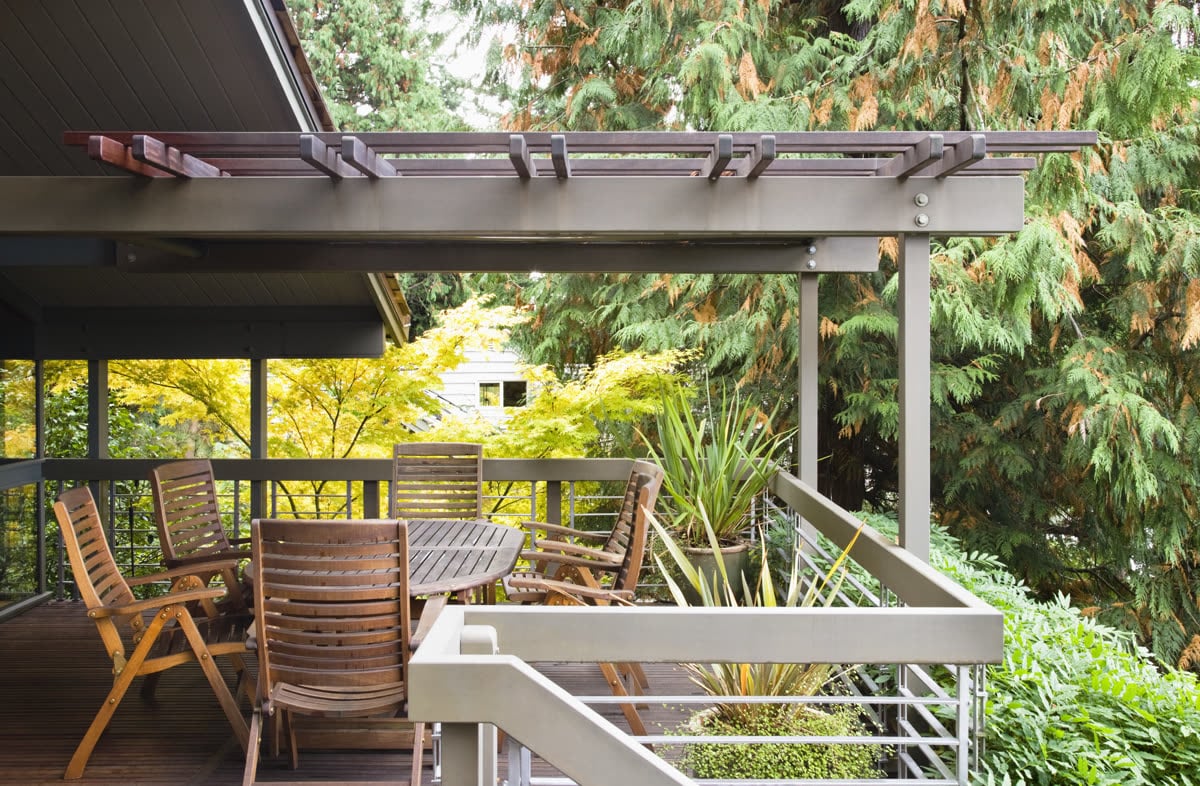
A single overhead fixture flattens a nook and makes it feel like a porch light rather than a gathering space. Layering three sources, a low ambient glow overhead, a small accent light near the seating, and a task light near any side table, creates the same depth lamps add indoors.
Warm white bulbs in the 2200 to 2700 Kelvin range read as cozy, while daylight-toned bulbs above 4000 Kelvin feel closer to a parking lot. Dimmable options give the most control over how warm the space feels.

 Turnkey Outdoor Designs