Residential License # 890459
Commercial License # 3667
Designing the Great Outdoors. - New Orleans's #1 Outdoor Design Company!



Talk to an Expert
Residential License # 890459
Commercial License # 3667
Talk to an Expert
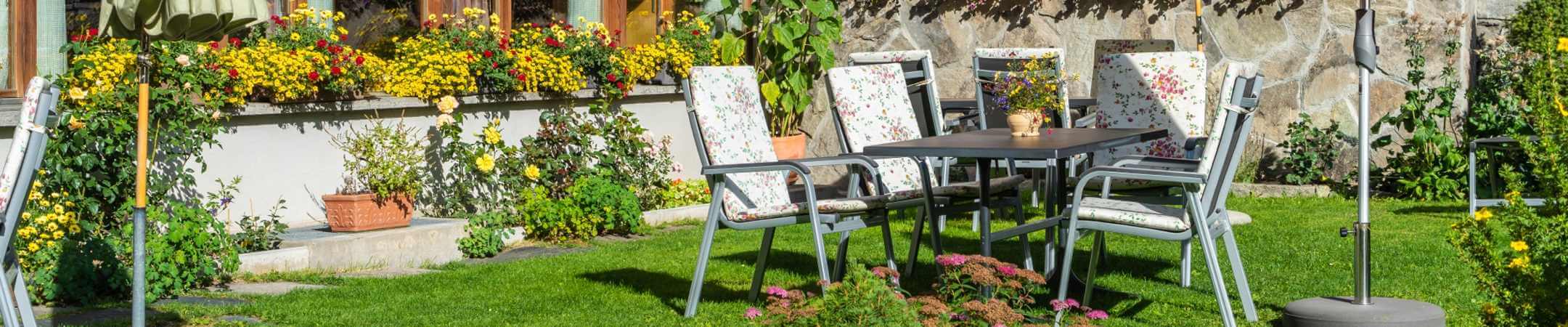
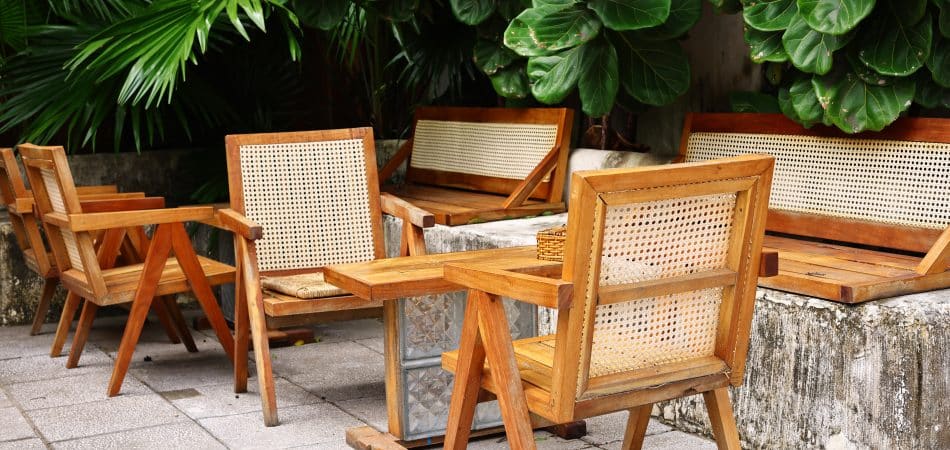
Outdoor furniture survives New Orleans humidity when the frame cannot rust, the fabric is solution-dyed, and the foam drains rather than holds water. Powder-coated aluminum, dense hardwoods, all-weather resin wicker, and sling seating all handle constant moisture well. Cushions are where most money gets wasted, because a rust-proof frame paired with water-holding foam still ends up mildewed and smelling like a wet basement.
Outdoor furniture shopping here is a different exercise than it is almost anywhere else. Air that stays damp most of the year, sun that does not let up, and salt riding in on the wind will find whatever the manufacturer skimped on.
The frame usually gets all the attention, and the cushions are what actually fail first. At TurnKey Outdoor Designs, we build the spaces this furniture ends up living in, so we see what has held up after a few seasons and what has not.
So here is what actually matters, in the order it matters. Contact us today to talk through the space before you commit to a set that has to live in it.
Three forces do almost all of the damage, and they work on different parts of the furniture. Knowing which one is hitting your setup tells you what to buy next time.
Humidity does not need rain to cause problems. Moisture in the air settles into foam, seat cushions, and any joint that traps it, then sits there because it never fully dries out.
That is the ideal condition for mildew, which needs moisture and something organic to feed on. Pollen, dust, sunscreen, and food residue on a cushion all qualify.
It also works on metal. Constant dampness on an unprotected steel joint or a chipped coating starts corrosion that a dry climate would take years to produce.
Ultraviolet exposure breaks down color, plastics, and finishes. It fades fabric, chalks painted surfaces, and makes cheaper resin brittle enough to crack under normal use.
Long, bright seasons here mean the exposure adds up faster than the label assumes. A fabric rated for average conditions gets a harder run than the rating implies.
Shade changes the math considerably. Furniture that spends its life under cover ages at a fraction of the rate of the same set sitting in open sun.
Coastal air carries salt inland, and salt accelerates corrosion wherever a protective coating has been breached. Even well inland, it is a factor on anything with exposed metal.
Storm season adds a different kind of wear. Wind-driven grit scours finishes, and debris chips coatings in ways that then let moisture in.
Furniture that gets moved or secured before a storm survives all of this better. That is a habit rather than a purchase.
Four frame categories genuinely earn their place in this climate. What they have in common is that none of them rust.
Aluminum does not rust, which is the single biggest advantage in a damp, salty environment. It forms a stable oxide layer rather than the flaking iron oxide that eats steel.
Powder coating adds color and a harder surface than wet paint. Where it matters is the edges and welds, so look at how well the coating covers those rather than at the flat panels.
It is also light, which is a real advantage when a storm is coming and everything has to move indoors quickly. On our patio projects this is the frame we see holding up best over time in open, unshaded spaces.
Teak carries natural oils and extractives that give it weather resistance without a finish. Left alone it weathers to a silvery gray, which is a surface change rather than a failure.
Other dense hardwoods behave similarly, though the oil content and the grade vary a lot. Furniture-grade timber and the cheap end of the same species are not the same product.
The trade-off is maintenance choice rather than maintenance load. Let it gray, or clean and oil it to keep the color, but decide which and be consistent.
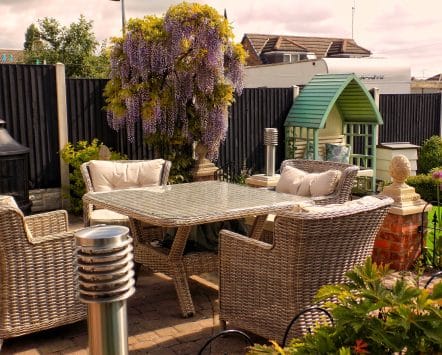
Resin wicker is a synthetic strand woven over a frame, usually aluminum. The strand does not absorb water the way natural wicker does, so it handles damp without swelling or rotting.
Quality varies more here than in any other category. Better strand holds up under sun, while cheaper strand goes brittle and starts snapping at the weave.
Check what the frame underneath is. Resin wicker over a steel frame puts the weak point somewhere you cannot see it.
Sling seating stretches a woven fabric across a frame with no cushion at all. Water passes straight through, so there is nothing to stay wet.
That makes it the lowest-maintenance seating option in a humid climate. Rain runs off, it dries in minutes, and there is no foam to worry about.
The fabric is doing all the work here, so look for a mildew-resistant outdoor fabric rated for sun rather than an indoor mesh. A sagging sling is usually a fastener issue rather than a fabric failure.
The compromise is comfort and softness. Sling suits dining and casual seating better than it suits a lounge setup you want to sink into.
Real talk: people spend carefully on the frame and then buy whatever cushions come with it. Then they replace those cushions in two seasons and wonder why.
Fabric is the first decision. Solution-dyed fabric has the color built into the fiber itself rather than printed on the surface, so it holds color under sun far longer than surface-printed fabric, which fades from the outside in.
Foam is the second and it is the one people skip. Standard closed foam holds water like a sponge, while quick-dry and reticulated foams have an open structure that lets water drain and air move, so the cushion actually dries. Pair that with a cover you can unzip and wash, because mildew grows on the residue sitting on a fabric rather than on the synthetic fiber itself, which means cleaning matters more than any label claim.
Here is the thing about covers: they help and they also cause problems. A cover that traps moisture underneath creates exactly the still, damp conditions that produce mildew.
Breathable covers, or covers that get lifted on dry days, work far better than sealing a set under plastic for months. If a cover comes off and the cushion underneath feels cool and damp, the cover is part of the problem rather than the solution.
Storage beats covering when storage exists. Cushions especially belong somewhere dry and ventilated between uses, which is one reason a covered outdoor room earns its keep here, and why our pergola and gazebo builds so often get specified with seating in mind.
A workable storage spot only needs a few things:
Buy the frame that cannot rust, then spend real attention on the fabric and the foam, because that is where sets fail here. Shade, ventilation, and somewhere dry to put cushions will do more for lifespan than any single purchase decision.
At TurnKey Outdoor Designs, we plan the space and the shade around how the furniture will actually be used and stored. Call us today to work through the layout before the furniture arrives.
Materials that cannot rust perform best, which puts powder-coated aluminum, dense hardwoods like teak, all-weather resin wicker, and sling seating at the top. The frame material matters less than whether the cushions can dry, since foam that holds water is the most common point of failure.
Teak handles humidity well, because its natural oils and extractives give it weather resistance without a protective finish. Left untreated it weathers to a silvery gray, which is a surface change rather than damage. Grade matters though, since furniture-grade teak and cheaper stock of the same species behave differently.
Choose quick-dry or reticulated foam so water drains rather than sits, use removable washable covers, and clean off the pollen, dust, and residue that mildew actually feeds on. Store cushions somewhere dry and ventilated between uses, and avoid sealing them under a non-breathable cover.
No. Aluminum does not form the flaking iron oxide that rusts steel, and instead develops a stable oxide layer that protects the metal underneath. That is why powder-coated aluminum is a strong choice in damp, salty air, though the coating still deserves attention at edges and welds.
Solution-dyed means the color is added to the fiber while it is being made, so it runs all the way through the strand rather than sitting on the surface. That is why it holds color under strong sun far longer than surface-printed fabric, which fades from the outside inward.
Storage is better where it is available, because a cover can trap moisture underneath and create the still, damp conditions that produce mildew. If you do cover furniture, use something breathable and lift it on dry days, and keep cushions somewhere dry and ventilated regardless.
Follow the fabric manufacturer’s cleaning guidance, because the right approach depends on the fiber and the finish. The more important point is that mildew is feeding on the residue on the fabric rather than the fabric itself, so regular cleaning prevents far more than any treatment fixes afterward.
Lifespan depends far more on shade, ventilation, and whether cushions get stored than on the purchase price. A set that lives in open sun and stays damp ages much faster than the same set under cover with cushions kept dry. Judge by conditions rather than by a manufacturer’s estimate.
 Turnkey Outdoor Designs