Residential License # 890459
Commercial License # 3667
Designing the Great Outdoors. - New Orleans's #1 Outdoor Design Company!



Talk to an Expert
Residential License # 890459
Commercial License # 3667
Talk to an Expert
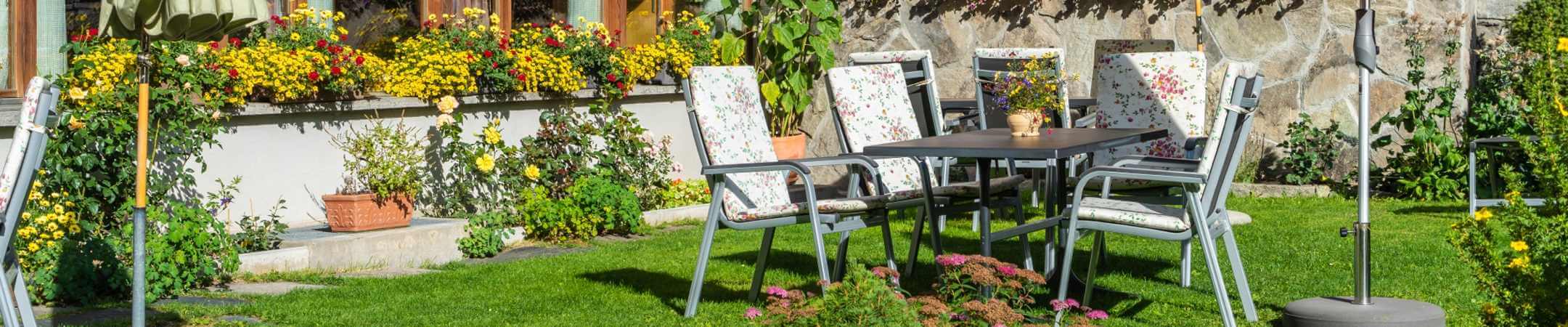
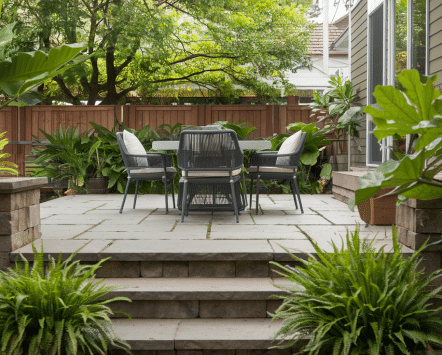
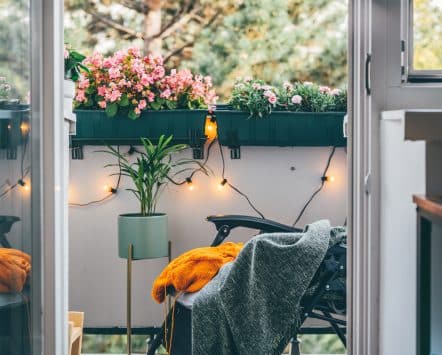
Transforming your patio into a personal, relaxing retreat is easily achievable by using outdoor planters to create, define, and enhance your space. By choosing the right planters and plants, you can create instant privacy, add calming greenery, and establish distinct, cozy “rooms” without needing permanent construction.
Outdoor planters introduce color, texture, and height to a flat patio space. The right mix of materials, shapes, and plant selections turns a basic slab into an outdoor room that reflects your style.
For New Orleans homeowners, choosing planters that handle heat, humidity, and heavy rain matters as much as the look. TurnKey Outdoor Designs builds custom patio spaces around your vision. Contact us today for a free estimate.
The best planter material for South Louisiana resists moisture damage and holds up under direct sun without cracking or fading.
 Wood: Cedar and cypress planters bring a warm, natural feel to rustic patio designs. Cedar resists rot thanks to its oil content. Bald cypress, Louisiana’s state tree, has deep local building roots. Old-growth cypress heartwood is highly durable, though today’s second-growth cypress offers moderate rot resistance and benefits from a sealant.
Rounded planters soften hard patio lines and pair well with trailing ivy, creeping jenny, or wave petunias. Rectangular planters create structure. Line them along walkways or group them with tall grasses to form a living privacy screen between your outdoor kitchen and a neighbor’s yard.
Tall, narrow planters draw the eye upward and pair nicely with bamboo or canna lilies. Sculptural or asymmetrical shapes act as standalone art pieces on modern patios.
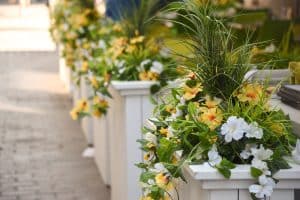 Neutral planters in charcoal, matte black, or concrete gray let the plants become the focal point. Ferns and variegated foliage pop against dark backgrounds. If your furniture is natural wood or wicker, neutral tones keep the palette cohesive.
Bold planters in terracotta red, cobalt blue, or bright yellow work as accent pieces. One or two statement planters near the entry or beside seating create energy without overwhelming the space.
Where you place planters shapes how the entire patio feels. Strategic positioning creates focal points, separates activity zones, and gives the layout a sense of order.
Not every plant performs well in a container, and New Orleans heat narrows the options further. The best picks tolerate high humidity, handle full or partial sun, and bounce back quickly after heavy afternoon rain.
Full Sun:
 Lantana and pentas are standout picks. Both are Louisiana Super Plant selections recognized by the LSU AgCenter.
Shade:
Herbs:
Planters are one piece of a larger design story. TurnKey Outdoor Designs works with New Orleans homeowners to plan and build complete outdoor spaces, from custom patios and decks to pergolas and outdoor kitchens. Call us today at (504) 702-6996 to get started.
Glazed ceramic, powder-coated metal, and cypress wood. Glazed ceramic retains moisture and resists cracking. Cypress heartwood naturally resists rot, though second-growth cypress benefits from a protective sealant. Avoid unglazed terracotta in direct sun.
Place rubber or felt pads beneath each planter. For heavier pots, use a wheeled plant caddy to avoid dragging. Elevating planters slightly also improves drainage and prevents water stains underneath.
Yes. Tall rectangular planters filled with bamboo, ornamental grasses, or dense shrubs create effective living screens. Position them in a row along the exposed side of your patio to block sightlines without installing permanent fencing.
A small patio under 100 square feet looks best with three to five planters at varied heights. Larger patios can support eight or more in groupings. Add personality without crowding walkable space.
Lantana, pentas, mandevilla, and hibiscus for full sun. Caladiums, coleus, and Boston ferns for shade. Rosemary, basil, and mint for herbs that double as patio decor near cooking areas.
Yes. Without them, water pools at the bottom after rain and suffocates roots. In New Orleans, planters without drainage can become waterlogged in a single afternoon storm. If your planter lacks holes, nest a smaller pot with drainage inside it.
Move lightweight resin and fiberglass planters indoors before a storm. Heavier ceramic planters can stay outside placed against a wall or in a sheltered corner. Group them together for support and remove tall plants that could catch wind.
Planters in the 12- to 18-inch diameter range balance visual presence with floor space on patios under 100 square feet. One or two larger statement pieces (20 inches or more) paired with smaller accent pots create variety without cramping the layout.
Not always. Indoor planters often lack drainage holes and may crack in direct sun or degrade in rain. Place a UV-resistant plastic pot with drainage inside the decorative pot to protect both the planter and the plant.
Most container plants need watering once daily during peak summer, sometimes twice above 95 degrees. Container soil dries faster than ground soil. Check the top inch each morning and water until liquid drains from the bottom. Mulching with pine bark helps retain moisture.
 Turnkey Outdoor Designs