Residential License # 890459
Commercial License # 3667
Designing the Great Outdoors. - New Orleans's #1 Outdoor Design Company!



Talk to an Expert
Residential License # 890459
Commercial License # 3667
Talk to an Expert


Outdoor Living Guide
A three-season room sounds like it was named for somewhere with snow. Here on the Gulf Coast, the season that tests a glass room is July, and the name can mislead you.
A three-season sunroom is a glass room attached to the house, meant for spring, summer and autumn and not conditioned all year. In New Orleans, NOAA’s 1991 to 2020 climate normals put the July high at 91.4°F and the January high at 62.5°F. So the room is easy to enjoy in the mild months, while summer comfort turns on shade, glazing and airflow.
Last Updated: November 10, 2026
A three-season room sounds like it was named for somewhere with snow. Here on the Gulf Coast, the season that tests a glass room is July, and the name can mislead you.
At TurnKey Outdoor Designs, we plan and build the sunrooms offered across Greater New Orleans, from the foundation to the glass. Our crews cover each of our fourteen service cities, reaching from New Orleans to Baton Rouge.
Let’s break down what a three-season room includes and what it leaves out. Then we’ll walk through how New Orleans weather treats it, month by month, and who it suits.
A three-season sunroom is a glazed room, walled and roofed in glass, that joins onto your house. Meant for spring through autumn and not conditioned all year, it fits New Orleans owners who mainly want the room in mild weather.
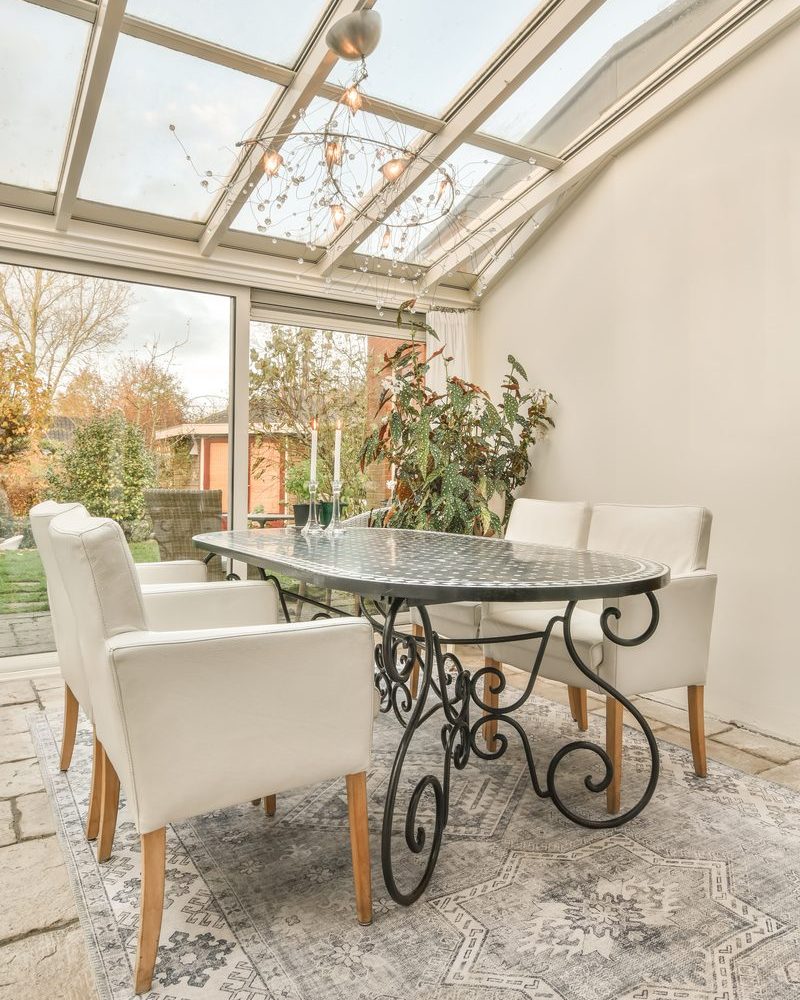 Think of a three-season room as a real room with a glass shell. Window panels form the walls, glazing covers the roof, and the whole shell connects to the house.
The seals matter a lot down here. Damp air and wind-blown rain test each seal, and bugs look for any opening, so we pick seals suited to this climate.
What you end up with is daylight and a view of the yard while the rain and the bugs stay outside. That alone can change how often the back of the house gets used.
The short version: a three-season room skips the full insulation and the heating and cooling that a four-season room carries. That is the whole difference in the name.
Its four-season cousin has full insulation plus heating and cooling, so it stays usable through high summer. A three-season room trades some of that comfort for a build without the conditioning. We cover that build in our guide to four-season sunrooms in New Orleans.
That trade is fine when you know it going in. The trouble starts when someone expects August comfort from a room that was never designed to give it.
A screened porch keeps out insects and still lets the air through. A three-season room swaps the screens for glass, so it also keeps out the rain and the wind.
Glass changes the feel of the space, too. You keep the sunlight and the outlook but lose the weather, so the space feels like part of the house.
If you are torn between the two, our sunroom versus screened porch guide sets them side by side. It covers insulation, upkeep and the seasons each one serves.
We build four sunroom types, and the three-season room sits in the middle. A patio enclosure walls in an existing covered patio, while a solarium uses glass for both the roof and the walls.
The four-season room is the fully conditioned end of the range. The three-season room gives you the glass and the shelter without that year-round system.
Light is a big part of why people pick any of these rooms. Our post on how natural light helps a home covers what daylight brings to a house.
New Orleans weather is mild for much of the year and hot for four months of it. NOAA’s 1991 to 2020 climate normals for New Orleans International Airport show the pattern, and sustained humidity and heavy rain sit on top of it.
| Months | Normal daily high (°F) | Norma |
|---|