Residential License # 890459
Commercial License # 3667
Designing the Great Outdoors. - New Orleans's #1 Outdoor Design Company!



Talk to an Expert
Residential License # 890459
Commercial License # 3667
Talk to an Expert
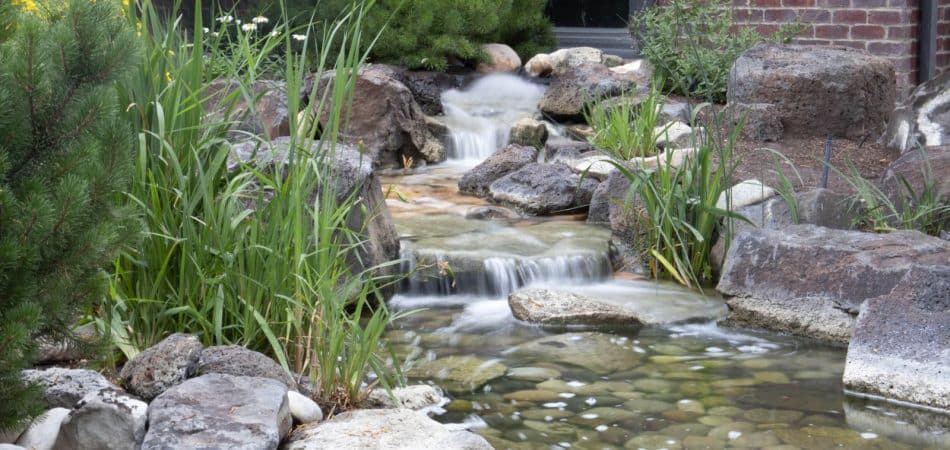
A mini waterfall for a tranquil New Orleans backyard combines a small pump, a short spillway, and either a pondless basin or a compact pond to create movement and sound without demanding a large footprint. Sizing the pump to the spillway width, choosing a pondless design where mosquitoes are a concern, and keeping the water constantly circulating are the details that separate a low-maintenance feature from a high-upkeep one.
At [TurnKey Outdoor Designs](https://www.turnkeyoutdoordesigns.com/), we hear the same request from homeowners planning a backyard refresh. They want the sound of moving water without a big pond to maintain.
New Orleans yards come with real constraints: humid summers, heavy rain, and a mosquito season that runs most of the year. The right design choices turn a small waterfall into a low-maintenance feature instead of a standing-water problem.
This guide covers the design decisions, pump basics, and climate considerations that make a mini waterfall work in this region. Contact us today to talk through a water feature built for your yard.
A mini waterfall is a compact feature built around a short spillway and a small recirculating pump, not a full pond or water garden.
A pondless waterfall recirculates water through a hidden underground vault, so there is no open pool of standing water at the surface. This design costs less to build, needs less upkeep, and carries a lower mosquito risk than a pond-based feature, which supports fish and plants but adds algae control. Most small New Orleans backyards get the same calming sound from a pondless design with far less long-term work.
A mini waterfall works best when its scale matches the yard around it, with a spillway of 12 to 24 inches wide and a rock feature two to three feet tall reading as intentional rather than oversized. Undersizing it can get lost against fencing or a patio, while going too big crowds the rest of the landscape. Matching scale to the surrounding hardscape keeps the yard feeling balanced.
Natural stone, manufactured veneer, and stacked boulders are the most common materials for a small waterfall’s spillway and rockwork. Placement usually works best near a patio, seating area, or garden bed where the sound reaches where people actually spend time outside. A waterfall tucked into a back corner rarely gets the same daily use as one visible from a patio design or a nearby window.
Getting a mini waterfall right comes down to a few technical decisions made before construction starts, not left to guesswork on-site.
Pump sizing is typically figured by spillway width, using a common guideline of roughly 100 to 150 gallons per hour for every inch of spillway to create a smooth, even sheet of water. A narrower flow produces a gentler trickle, while a flow well above that baseline creates a bolder, louder cascade. The wrong flow rate is one of the most common reasons a finished waterfall looks underwhelming or too aggressive.
Spillway width has as much influence on the finished look as pump power does. A spillway between 12 and 18 inches suits most small backyard designs, wide enough to look substantial without an oversized pump. Wider spillways create a more dramatic sheet but demand a bigger pump, and a level, slightly rounded lip keeps the water releasing as one even sheet instead of separate streams.
The distance between the pump and the spillway affects sizing as much as spillway width does. A common rule of thumb adds roughly one foot of pump head for every 10 feet of tubing run, since longer runs and higher lift both reduce delivered flow. All electrical connections should run through a GFCI-protected outlet rated for outdoor use, guarding against shock risk.
New Orleans’ humid, subtropical climate makes mosquito management a real design factor, but a properly built waterfall works against mosquitoes rather than for them.
Mosquitoes need still water to lay eggs and complete their life cycle, and standing water can begin producing mosquitoes within just a few days in a warm, humid climate like New Orleans. According to LSU AgCenter, even a small amount of undisturbed water, from a clogged basin to a low spot that never fully drains, is enough to start a breeding cycle.
A waterfall that keeps water circulating around the clock works against mosquito breeding rather than creating a new source of it. Larvae breathe through a tube at the water’s surface, and constant ripples or splashing make it difficult for them to hold position long enough to develop.
A surface skimmer removes leaves and debris before they sink and start decomposing, which keeps the feature from building up the organic matter mosquito larvae feed on. Running the pump continuously, rather than shutting it off for long periods, keeps water moving and unattractive to egg-laying mosquitoes. LSU AgCenter also recommends keeping open water clean of algae and changing standing water every three to five days.
Building a mini waterfall follows a fairly consistent process, whether it is a pondless spillway wall or a small pond-based feature.
Construction starts with excavating the basin or vault that holds the recirculating water and houses the pump below the surface. A pondless design uses a gravel-covered vault with a liner, while a pond-based design excavates a wider, shallower basin for an open pool. Leveling this base correctly matters, since an uneven basin can pool water unevenly or overflow the liner during heavy Gulf Coast rain.
Once the basin is set, the pump goes in first, followed by the spillway stone that shapes how water falls and sounds. Boulders and accent stones get placed to hide the liner edges and direct water back toward the basin. This stage is where the flow-rate and spillway-width decisions get tested, often alongside a nearby outdoor kitchen or seating area the feature complements.
Ongoing care mostly means clearing debris, checking the pump, and topping off water lost to summer evaporation. The table below compares common styles and the flow rate each typically needs.
| Waterfall Type | Typical Flow-Rate Guideline | Best For |
|---|---|---|
| Pondless spillway wall | 100-150 GPH per inch | Small, low-maintenance yards |
| Pond-based waterfall | 100-150 GPH per inch, plus pond turnover | Fish or aquatic plants |
| Rock-stack tiered waterfall | 150-250 GPH per inch | Sloped lots, vertical interest |
| Wall-mounted spillway or urn | 50-100 GPH per inch (trickle) | Tight patios, courtyards |
A well-sized mini waterfall gives a small New Orleans backyard the sound and movement of a much larger water feature without the mosquito risk or upkeep of a full pond. TurnKey Outdoor Designs designs each build around the yard’s actual size, humidity, and use, not a one-size-fits-all layout.
If a quiet corner of your backyard could use the sound of moving water, the right design choices make it a low-maintenance feature instead of a chore. Call us today to schedule a consultation for a mini waterfall built for your yard.
A small pondless waterfall typically costs less than a pond-based feature of similar size, since it needs less excavation, no fish-safe liner system, and a smaller pump. Exact pricing depends on spillway size, materials, and site conditions, so a walkthrough of the yard is the most accurate way to get a number.
A properly built waterfall with continuously moving water does not attract mosquitoes, since mosquitoes need still water to lay eggs and complete their life cycle. Problems only start when a pump sits off for long periods or debris builds up and creates pockets of standing water.
Pump size is typically based on spillway width, using a guideline of about 100 to 150 gallons per hour for every inch of spillway to create an even sheet effect. Tubing length and lift height between the pump and the spillway also factor into the final size.
A pondless design is usually the better fit for a small yard, since it needs less space, less maintenance, and carries less mosquito risk than an open pond. A pond-based design still makes sense for homeowners who specifically want fish or aquatic plants.
A pondless waterfall mainly needs periodic debris removal, a pump check, and occasional water top-offs to replace what evaporates, especially during hot summer months. A pond-based waterfall adds algae control and aquatic plant or fish care on top of those basics.
Yes, a mini waterfall can run year-round in a humid climate like New Orleans, since continuous circulation is what keeps the feature from becoming a mosquito or algae problem. Periods of extended shutdown are when maintenance issues are most likely to start.
Waterfall sound is largely controlled by spillway width and flow rate, with a narrower, lower-flow trickle producing a quiet background sound and a wider, higher-flow sheet creating a bolder rushing sound. Most small backyard designs aim for a gentle-to-moderate sound that supports conversation rather than drowning it out.
A mini waterfall works best near a patio, seating area, or another spot where people spend time outside, so the sound is actually part of daily use. Corners with existing shade or an established pergola or garden bed often make natural, low-disruption placement options.
 Turnkey Outdoor Designs